Urban luxury destinations USA: A diagnostic audit of elite hospitality.
The conventional understanding of urban travel is rooted in the “destination” concept—the assumption that a city’s inherent prestige, its cultural landmarks, or its financial districts imbue any accommodation within its borders with value. This is a profound error in logic. For the serious traveler, the city is not the experience; the city is the environment, and the hotel is the operating system. When evaluating the landscape of elite metropolitan travel, the focus must shift entirely from the external prestige of the geography to the internal operational capacity of the asset.
The most sophisticated travelers—those who treat their time and attention as finite, high-value resources—do not seek out the “best” hotels in a generic sense. They seek out “mission-aligned” properties. A property that excels at hosting high-stakes, private diplomatic negotiations is, by definition, ill-equipped to serve as a hub for a creative, social, or high-energy artistic residency. The failure to align the traveler’s specific mission with the property’s operational DNA is the primary cause of friction in high-end travel.
This article serves as an analytical audit of the sector. It does not provide a curated list of popular hotspots; instead, it offers a framework for deconstructing the operational requirements of metropolitan luxury. By examining the mechanics of service, the architecture of privacy, and the reality of infrastructural maintenance, we can identify which properties actually deliver on the promise of an elite experience and which are merely leveraging a prestigious zip code to mask operational mediocrity.
Understanding “urban luxury destinations usa”
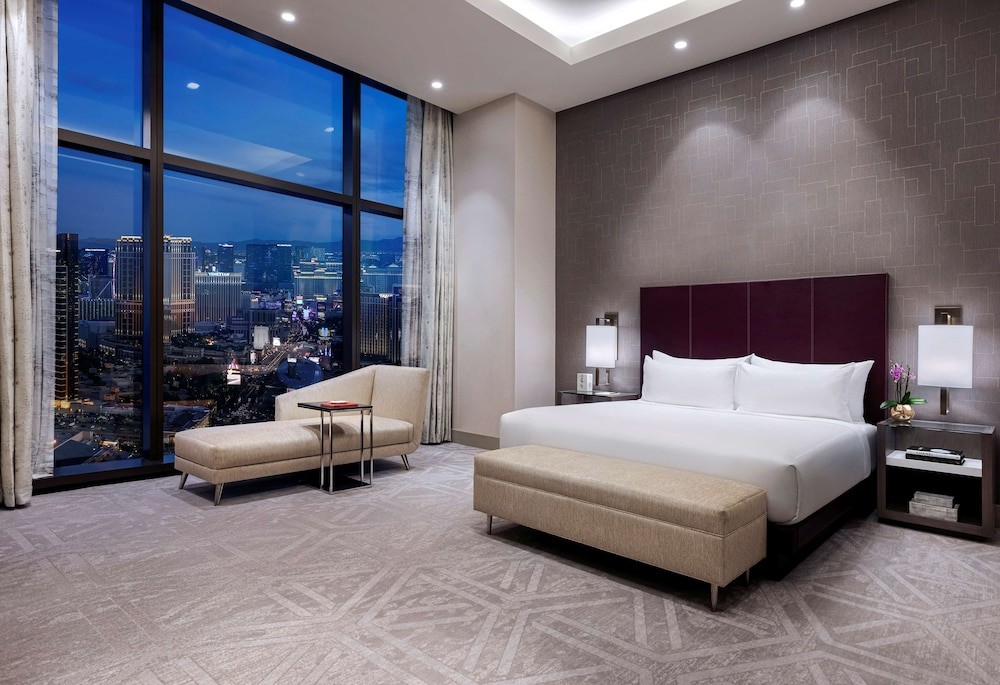
The term urban luxury destinations usa is frequently misused in travel media, acting as a catch-all phrase for any property with high room rates and decent design. To understand the category, one must strip away the marketing layer and look at the “Service-Utility Ratio.” A truly elite urban property is not defined by its lobby aesthetics but by its ability to neutralize the chaos of the city for its guests. The “luxury” is the removal of friction. When a traveler enters a high-end property in a dense metropolitan environment, they should experience a tangible shift in operational gravity: noise, time pressure, and logistical complexity should dissipate.
Common misunderstandings center on the idea that urban luxury is a static state. In reality, it is a dynamic, high-maintenance endeavor. An urban property faces constant operational pressure—security threats, public-facing traffic, high utility demand, and the relentless turnover of transient populations. Consequently, the “best” properties are those that have developed internal fortifications—physical and digital—to protect the guest from these pressures.
Oversimplification poses a significant risk here. Many travelers assume that because a property is part of a “global luxury brand,” it is immune to the specific, gritty challenges of an urban environment. This is false. A global brand standard can actually be a liability in an urban setting if it mandates a “public-facing” lobby culture that compromises the security and privacy of the guest. Understanding urban luxury destinations usa requires an appreciation for the tension between the property’s role as a public-facing entity and its duty as a private sanctuary.
Deep Contextual Background: The Evolution of Metropolitan Hospitality
The history of high-end urban hospitality in the United States reflects the broader evolution of the American city. In the early 20th century, the “Grand Hotel” was the epicenter of the urban ecosystem. These buildings were self-contained cities—they had their own power plants, their own laundry facilities, their own security, and, most importantly, their own deep, institutional memories. The staff were often generational, knowing the preferences of the city’s elite families by heart.
The middle of the century saw the corporatization of this model. Efficiency became the metric of success. The “Grand Hotel” structure was replaced by the “International Hotel” model, characterized by standardized floor plans, corporate branding, and mobile, transient workforces. While this model was incredibly efficient at scale, it eroded the “human infrastructure” that made the early hotels so capable.
We are currently in a corrective phase. The most successful urban luxury destinations usa today are those that are actively reversing the corporatization trend. They are reinvesting in “human infrastructure”—tenured concierge teams, private security cadres, and proprietary data systems—that replicate the institutional knowledge of the 1920s with the speed and reliability of the 2020s. This synthesis of historical human focus and modern operational efficiency is the defining characteristic of the elite urban property in 2026.
Conceptual Frameworks and Mental Models
To evaluate urban properties with the rigor of a professional auditor, apply the following frameworks:
-
The Privacy-Proximity Tradeoff: In urban settings, privacy and proximity are usually mutually exclusive. The closer you are to the city center, the harder it is to secure total privacy. The “best” hotels are those that use architecture and protocol to defy this rule.
-
The “General Manager” Primary Indicator: In branded resorts, the brand is the product. In urban luxury, the General Manager is the product. A property’s operational culture is almost entirely a reflection of the current GM’s focus. If the GM has been in the role for less than 18 months, the property is in a high-risk transition phase.
-
The “Friction Audit”: Does the design prioritize aesthetics over utility? For example, are there excessive digital interfaces for basic room controls, or is the lighting design confusing? If the design creates user friction, the hotel has failed its primary operational duty.
Key Categories and Variations of Urban Properties
Decision logic should be driven by the specific operational need of the visit. If the mission is high-stakes negotiation, the “High-Rise Integrated” model is often superior because of its ability to lock down floor access and secure network infrastructure. If the mission is long-term creative work, the “Adaptive-Use Boutique” may offer the environment necessary to facilitate deep work, provided one verifies the soundproofing beforehand.
Detailed Real-World Scenarios
Scenario 1: The Secure Consultation
A team needs to conduct a sensitive, multi-day meeting in a dense, public-facing city center.
-
Constraints: Data security, noise cancellation, private dining, no public foot traffic.
-
Decision: The team selects a hotel known for “hardened” access points—where the lobby is not the primary transit point for all guests.
-
Failure Mode: Selecting a design-forward, “lobby-centric” hotel with an open bar area. The noise and public proximity would compromise the discussion and increase the team’s stress levels.
Scenario 2: The Creative Sabbatical
An individual seeks an urban location to complete a complex intellectual project.
-
Constraints: Need for total isolation from the “tourist pulse,” high-speed bandwidth, and 24-hour service capability.
-
Decision: Selecting a “Historic Bastion” that offers suite layouts with a clear division between work and rest areas.
-
Failure Mode: Selecting a trendy, influencer-heavy boutique property. The constant turnover of guests and the lack of experienced night staff would result in a fragmented and disrupted work cycle.
Planning, Cost, and Resource Dynamics
The economic management of urban luxury requires an audit of the “Total Cost of Presence.” When considering urban luxury destinations usa, the room rate is the least significant line item.
If a property saves you $300 a night but lacks the infrastructure to handle your data security or logistics, you are essentially losing money. Elite travel should be viewed as a capital expenditure on your own productivity and recovery, not as a leisure expense.
Tools, Strategies, and Support Systems
-
The Pre-Arrival Dossier: Do not rely on the hotel’s generic preference form. Create a concise, one-page document detailing your specific requirements (internet protocols, dietary needs, sleep environment, scheduling) and ensure it reaches the General Manager’s office 72 hours before arrival.
-
Direct Sales Relationship: If you plan to stay in a city multiple times, bypass the reservation desk. Establish a direct contact with the Director of Sales. They have the authority to manage your long-term account and can provide concessions that the front desk cannot.
-
The “Sweep” Protocol: Upon arrival, physically verify the room’s access points, the network connectivity (use a dedicated, encrypted travel router), and the sound profile. If it fails the sweep, request a room change immediately.
-
Loyalty Arbitrage: Consolidate your stays within a single high-end network. While the loyalty points themselves are often low-value, the status gained is a tangible asset used to demand service recovery when the system fails.
Risk Landscape and Failure Modes
The primary risk in the urban luxury sector is “Institutional Drift.”
-
The Maintenance Trap: Urban hotels operate under constant, 24/7 wear and tear. A property that is not operating on a strict, preventative maintenance cycle will suffer from “invisible decay”—slow internet, erratic climate control, and degrading hardware.
-
The “Key Person” Dependency: Boutique properties often rely on a single, talented individual. If that person (the GM or Head Concierge) leaves, the operational culture can collapse within a quarter.
-
The Security-Visibility Paradox: Properties that invest heavily in public-facing marketing often neglect the “invisible” security measures. A lobby that is designed to be “seen” is rarely a lobby designed to be secure.
Governance, Maintenance, and Long-Term Adaptation
Treat your relationship with a preferred property as a portfolio asset.
-
Audit Cycle: Re-evaluate your preferred properties every 12 months. Urban environments shift; a hotel that was excellent last year may have changed ownership or management focus.
-
Adjustment Triggers: If a property fails to meet two specific requests in a row, initiate a “Re-Vet.” Do not allow past loyalty to override current performance data.
-
The Layered Checklist:
-
[ ] Verification of network security (partitioned Wi-Fi).
-
[ ] Tenure review of senior staff (GM, Concierge, Housekeeping Head).
-
[ ] Audit of the “Public-to-Private” flow (how many public areas must be traversed to reach the room?).
-
Measurement, Tracking, and Evaluation
-
Leading Indicators: The responsiveness to non-urgent, specific pre-arrival requests. If they are proactive and precise here, they will be proactive in a crisis.
-
Lagging Indicators: The “Service Resolution Speed.”
-
Qualitative Signal: “Silent Recognition.” The best properties know your preferences without you having to state them, but they do not make a performance of it. They simply execute.
Common Misconceptions and Oversimplifications
-
Myth: “The most famous hotel in the city is the best.” Correction: Famous hotels are often the most crowded, noisy, and impersonal.
-
Myth: “Price is a proxy for service.” Correction: High pricing often pays for the brand’s marketing and overhead, not necessarily the depth of the concierge team.
-
Myth: “The newest hotel is the best.” Correction: New hotels often suffer from “teething issues”—untested staff, incomplete systems, and construction residue.
-
Myth: “Loyalty status solves all problems.” Correction: Status helps with upgrades, not with operational complexity.
Ethical and Practical Considerations
In the current urban landscape, the most resilient properties are those that integrate ethically and sustainably into their neighborhoods. A hotel that acts as an “island” of extraction, failing to support local labor or environmental standards, is structurally brittle. It lacks the deep, community-level relationships that are required to manage local operational disruptions (e.g., transit strikes, utility failures). Choosing properties that demonstrate a commitment to their specific urban environment—rather than generic, top-down branding—is an indicator of a well-managed, long-term asset.
Conclusion
Navigating the landscape of urban luxury destinations usa is an exercise in operational discipline. By prioritizing transparency, counterparty reliability, and mission-fit over the simplicity of marketing promises, the discerning individual can transform their metropolitan stay from a source of friction into a strategic asset. The imperative to understand and rectify the common pitfalls in this sector is not about finding the most opulent decor; it is about finding the environment where the complexity of the city is stripped away, leaving only the clarity required to perform at one’s highest level.