Luxury boutique hotels USA: A strategic audit of the independent hospitality sector.
The American hospitality sector has undergone a profound structural shift over the last three decades, moving away from the era of hyper-standardized, branded uniformity toward a model defined by idiosyncrasy and site-specific identity. This evolution—the rise of the independent boutique segment—has fundamentally altered the definition of high-end travel. For the discerning traveler, identifying the luxury boutique hotels usa market leaders is no longer a task of recognizing a global logo; it is an exercise in auditing operational intent, creative vision, and localized service capability.
This sector sits at the intersection of real estate, interior design, and high-stakes service management. Unlike the “big box” luxury chains that rely on predictable, algorithmic service standards to ensure global consistency, the boutique property operates on the premise that value is derived from difference. This creates a challenging environment for the consumer: when service standards are not centrally dictated, quality becomes volatile. The burden of due diligence shifts from the brand’s reputation to the specific operational team currently managing the property.
To navigate this landscape, one must move beyond the curated imagery of lifestyle publications. This article serves as a rigorous, diagnostic framework for evaluating these properties. We will examine the business model, the risk profiles inherent in independent management, and the mental models required to evaluate whether a property is a genuine leader in the field or merely a stylized commodity. By understanding the mechanics behind luxury boutique hotels usa, you can transition from a passive guest to an informed auditor of the hospitality experience.
Understanding “luxury boutique hotels usa”

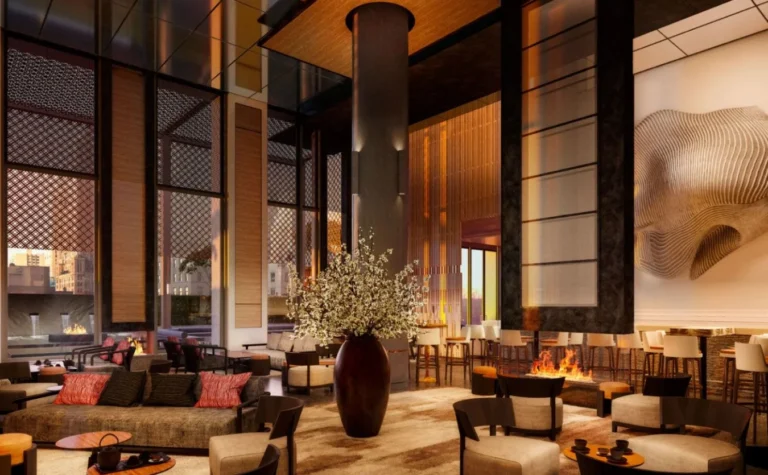
The definition of luxury boutique hotels usa is frequently misunderstood, often conflated with “small hotel” or “design hotel.” To clarify: boutique is a strategic stance, not a size constraint. It represents a deliberate decision to reject the “fungibility” of large-scale hospitality in favor of a curated, localized narrative. A true boutique property is one where the architecture, the service culture, and the operational systems are tuned to a specific demographic and site, rather than designed to be replicated across hundreds of locations.
The common misunderstanding here is that boutique properties are inherently more “luxurious” or “personalized” than their larger counterparts. This is a fallacy. Boutique properties suffer from higher volatility. Because they lack the standardized training manuals and global logistics networks of major brands, their service consistency is almost entirely dependent on the specific General Manager (GM) and their team. When the staff at a boutique hotel performs well, the result is an experience that feels deeply human and tailored; when they perform poorly, there is no corporate safety net to correct the error.
Oversimplification in this sector leads to significant selection errors. Many travelers assume that high design-forwardness equates to high operational service. In reality, these are often decoupled. One can find properties with world-class aesthetics that fail basic operational benchmarks, such as timely communication, security, or facility maintenance. Understanding the segment requires a split focus: one eye on the “story” the hotel tells, and one eye on the operational machinery that executes that story.
Deep Contextual Background: The Evolution of the Independent Sector
The trajectory of the boutique movement in America began in the late 1980s as a reactionary movement against the sterile, mass-market hotels that dominated the urban landscape. It was a counter-culture in real estate. The initial appeal was purely aesthetic—a shift toward “cool” and “lifestyle” integration. However, the market has matured significantly since then.
By 2026, the sector has branched into several distinct sub-movements. We have moved from “Lifestyle Boutique”—which prioritized bars and nightlife—to “Contextual Boutique,” which prioritizes architectural heritage and local immersion. Furthermore, the rise of sophisticated independent management groups has introduced a level of operational rigor that was previously absent. Today’s premier luxury boutique hotels usa are no longer just “mom-and-pop” operations; they are often sophisticated assets managed by firms that specialize in maintaining “boutique soul” at a high level of operational precision. This maturity allows for a more reliable product, but it also necessitates a more discerning approach from the traveler.
Conceptual Frameworks and Mental Models
To effectively audit the boutique segment, apply these three diagnostic models:
-
The Scale-vs-Sensitivity Trade-off: Understand that operational consistency is generally inversely proportional to the degree of creative independence. The more “unique” a property, the higher the risk of operational variance.
-
The “General Manager” Primary Indicator: In branded hotels, the brand is the product. In boutique hotels, the GM is the product. If the property has had three GMs in five years, the operational consistency is likely broken.
-
The “Friction Audit”: Does the property sacrifice functionality for design? (e.g., Are the light switches impossible to find? Is the shower design confusing?) If the design creates user friction, the property has failed its primary duty as a hotel.
Key Categories and Variations of Property Types
When evaluating luxury boutique hotels usa, categorization is essential for managing expectations.
| Category | Operational Focus | Primary Value Driver | Risk Level |
| Heritage/Landmark | Preservation | Historical narrative | High (Maintenance) |
| Urban Design | Aesthetics/Lifestyle | Proximity to culture | Moderate (Crowds) |
| Nature/Immersion | Environment/Wellness | Seclusion/Scope | High (Logistics) |
| Member-Club Hybrid | Exclusivity/Security | Privacy/Access | Low (Gatekeeping) |
Decision logic should follow the “Purpose-Fit” rule. If the purpose of the trip is focused work, avoid the “Urban Design” category, which often lacks the soundproofing and office-grade infrastructure required for high-level productivity. If the purpose is rest and recovery, the “Nature/Immersion” category is superior, provided the property has the operational depth to handle its remote location.
Detailed Real-World Scenarios
Scenario 1: The Creative Off-Site
A small leadership team needs a quiet, distraction-free environment for strategic planning.
-
Constraint: Need for secure, tech-enabled meeting spaces, high-quality catering, and total privacy.
-
Decision: The team selects a “Nature/Immersion” boutique property.
-
Failure Mode: The property, while beautiful, lacks high-speed fiber internet and has “open-concept” architecture that prevents private discussions.
-
Second-Order Effect: The off-site is a failure because the team spent more time troubleshooting connectivity than discussing strategy.
Scenario 2: The Urban Exploration Trip
An individual traveler wants to experience the culture of a major city while maintaining a private “sanctuary.”
-
Constraint: Proximity to cultural landmarks but isolation from tourist density.
-
Decision: Selecting a “Member-Club Hybrid” boutique hotel that restricts lobby access to guests and members.
-
Failure Mode: Selecting a “Lifestyle” hotel with a lobby bar that draws public crowds, effectively turning the lobby into a noisy, tourist-heavy zone.
Planning, Cost, and Resource Dynamics
The economic management of boutique stays involves recognizing that you are often paying a premium for independency.
| Cost Variable | Financial Impact | Variable Type |
| Brand Premium | N/A (Independent) | Lower / Hidden |
| Operational/Maintenance | High (Pass-through) | Variable |
| Design/Artistic Premium | High | Fixed |
| Opportunity Cost of Errors | High | Extreme |
Budgeting for luxury boutique hotels usa requires factoring in the “Service-Recovery Buffer.” In a branded hotel, the protocol for a mistake (e.g., a room change) is defined. In a boutique hotel, it is improvised. You must budget for the fact that you may need to manage your own logistical corrections if the team is overwhelmed.
Tools, Strategies, and Support Systems
-
The “Pre-Arrival Technical Audit”: Contact the property and ask for specific details about the internet (ISP, speed, redundancy). If they cannot answer, they do not manage their tech environment.
-
Concierge-Testing: Ask the concierge for a non-tourist-standard recommendation (e.g., a specific local resource, a unique local connection). A lack of knowledge here indicates a lack of deep, local operational integration.
-
Third-Party Concierge Consortia: Use networks like Virtuoso or similar high-end travel advisors. They often maintain independent relationships with the GMs of these properties, providing a layer of accountability that a standard OTA booking does not offer.
-
Social Listening (The “Complaints Audit”): Look at the most recent negative reviews, but ignore the “slow service” complaints. Look for structural issues (e.g., “the AC is always broken,” “the staff didn’t know how to handle X”). Structural complaints indicate a management failure.
Risk Landscape and Failure Modes
The “Boutique Risk” is almost always a result of inadequate systems.
-
The Maintenance Trap: Independent hotels lack the capital reserves of major chains to perform “preventative” maintenance. They often operate on a “break-fix” cycle.
-
The “Key Person” Dependency: A boutique hotel is often the reflection of one person’s vision. If that person (the owner or GM) leaves, the property can lose its soul and its operational standard within a single quarter.
-
Security Anonymity: Smaller properties often have weaker security protocols. In an era where digital and physical security are paramount, verify that the property has formal access control, not just a friendly front desk clerk.
Governance, Maintenance, and Long-Term Adaptation
Treat your relationship with a boutique hotel as a portfolio asset.
-
Audit Cycle: If you find a boutique hotel that meets your needs, return to it. But be aware: independent hotels change. Re-evaluate the management team annually.
-
Adjustment Triggers: If you notice a change in the “feel” of the staff or a decline in the quality of the lobby, do not give them the benefit of the doubt. Boutique hotels decline rapidly when management focus shifts.
-
The Layered Checklist:
-
[ ] Is the Wi-Fi partitioned?
-
[ ] Has the senior management team changed in the last 12 months?
-
[ ] Are the amenities localized or generic white-label products? (Generic products suggest a lack of curation.)
-
Measurement, Tracking, and Evaluation
-
Leading Indicators: The speed and specificity of the response to your pre-arrival requests. If they are generic, the stay will be generic.
-
Lagging Indicators: The “Service Resolution Ratio.” If a mistake occurs, does the team own it and fix it immediately, or do they offer excuses?
-
Qualitative Signal: Look for “Intangible Curation.” Does the hotel provide local items that you cannot find on a search engine? If the “local” experience is just a list of the top TripAdvisor attractions, the hotel is not curated; it is generic.
Common Misconceptions and Oversimplifications
-
Myth: “Boutique means small.” Correction: Boutique is about a specific viewpoint and experience, not room count.
-
Myth: “All independent hotels are luxury.” Correction: Many independent hotels are simply unbranded and poorly run.
-
Myth: “Design is the most important factor.” Correction: Design is the least important factor if the infrastructure fails.
-
Myth: “They don’t have corporate rules, so they are more flexible.” Correction: They don’t have corporate rules, which means they are unpredictable.
Ethical and Practical Considerations
In the current landscape of luxury boutique hotels usa, ethical operations are a high-value signal. Properties that genuinely integrate with their local community—using local vendors, employing local residents, and respecting local environmental constraints—are consistently more resilient than those that function as “islands” of consumption. An ethical hotel is usually a well-managed hotel. If the property communicates its local impact clearly and without marketing hyperbole, it is a sign that the management is focused on reality, not just perception.
Conclusion
The boutique hospitality sector in the United States offers a compelling alternative to the standardized product of the major chains, but it requires the traveler to adopt a more rigorous methodology of selection. By moving beyond the aesthetic allure and interrogating the operational backbone, one can find properties that provide not just a room, but a specific, curated experience that enhances the purpose of the trip. The most successful luxury boutique hotels usa are those that have bridged the gap between independent, localized personality and institutional-grade operational reliability. When selecting these properties, always prioritize the management, the system, and the intent over the decor, ensuring that your travel remains a strategic asset rather than a variable risk.