Best coastal luxury hotels in the US: A strategic audit of seaside assets.
The American coastline is a geographically diverse asset class, ranging from the rugged, salinity-saturated cliffs of the Pacific Northwest to the humid, barrier-island environments of the Atlantic South. When identifying the best coastal luxury hotels in the us, it is insufficient to evaluate them purely on aesthetics or guest room design. High-end coastal hospitality operates in one of the most hostile maintenance environments on the planet. The constant degradation caused by salt air, humidity, and volatile weather patterns requires an level of capital reinvestment and operational focus that inland properties simply do not encounter.
True luxury in this sector is defined by resilience and seamlessness. It is the hotel’s ability to provide a frictionless environment despite the aggressive natural forces acting upon the building’s infrastructure. When a property markets itself as a premier seaside destination, the discerning traveler must look past the photography of the shoreline. The actual value proposition lies in the property’s ability to mitigate the environmental friction—preserving the silence, the air quality, and the structural integrity—so that the guest experience remains undisturbed.
This article serves as a professional audit of the coastal hospitality sector. It provides the frameworks necessary to differentiate between superficial marketing and operational excellence. By moving from a consumer-led inquiry to an asset-based evaluation, one can distinguish which properties offer a lasting, high-value experience and which are merely leveraging their location for short-term revenue. Identifying the best coastal luxury hotels in the us requires a shift in mindset: treat the property as a complex ecosystem that must be managed, not just occupied.
Understanding “best coastal luxury hotels in the us”
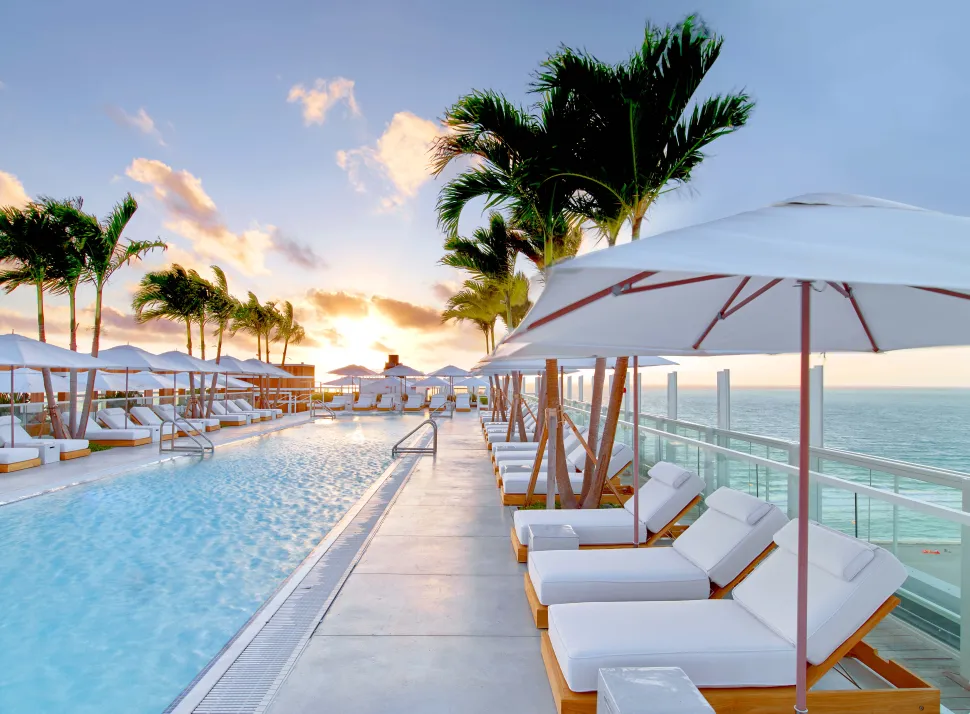
The challenge of defining the best coastal luxury hotels in the us is complicated by the disparate nature of the US coastline. A property on the coast of Maine faces different operational realities—short seasons, intense winter storms, unique historical preservation laws—than a property in Southern California or South Florida. Consequently, the “best” property is not a fixed universal standard; it is a matching exercise between the property’s specific operational strengths and the traveler’s specific mission requirements.
Common misunderstandings arise when travelers apply a uniform checklist to properties that operate under vastly different logic. For instance, the expectation of year-round outdoor pool accessibility is a standard in Florida but an operational impossibility in the Pacific Northwest. The failure to adjust one’s criteria based on the micro-climate of the property leads to significant disappointment. Oversimplification—the assumption that high nightly rates correlate directly to better service or facility maintenance—is another critical error. In the coastal luxury market, a high rate is often a reflection of location scarcity, not necessarily operational or infrastructural superiority.
True mastery in selecting these assets involves recognizing the “Lifecycle Phase” of a property. A hotel that has recently undergone a multi-year, capital-intensive renovation is operationally superior to a landmark property that has relied on its brand reputation for a decade. The best coastal luxury hotels in the us are those that maintain a continuous cycle of renovation, regardless of how prestigious their name or location may be. Understanding this allows the sophisticated planner to prioritize asset health over brand heritage.
Deep Contextual Background: The Evolution of Seaside Resorts
The American seaside resort has evolved from the mid-19th-century “Grand Hotel” model—designed for extended, seasonal stays—to the modern “lifestyle boutique” concept. In the early 20th century, these properties were often isolated, self-contained ecosystems. They provided everything the guest needed because the coastal location was, by definition, remote and inaccessible.
The rise of modern infrastructure changed this. Accessibility made coastal locations viable for short-term business and weekend leisure, forcing hotels to pivot from “destination ecosystems” to “luxury service nodes.” This shift brought significant challenges. The luxury consumer now expects city-level service standards (high-speed connectivity, 24-hour business support, international-grade dining) in locations that are physically difficult to service. The properties that have successfully navigated this are the ones that have integrated high-tech operational systems (automated climate control, predictive maintenance) into their physical assets while preserving the “escapist” aesthetic that draws guests to the coast in the first place.
Conceptual Frameworks and Mental Models
To effectively vet properties, apply these frameworks:
-
The Environmental Mitigation Ratio (EMR): Assess how much of the luxury experience is devoted to managing the environment (keeping the room humidity-controlled, the soundproofing effective, the outdoor furniture pristine). A property with a high EMR is actively managing its coastal status.
-
The “Accessibility-Seclusion” Spectrum: Recognize that you cannot have absolute seclusion and total accessibility. If a property claims both, it is likely compromising on one. Decide which variable is the priority for your specific stay.
-
The Seasonal Volatility Index: When researching the best coastal luxury hotels in the us, one must investigate the property’s staffing model. Are they a year-round operation, or do they “ramp up” and “ramp down” with seasonal labor? The latter model often leads to service inconsistency at the beginning and end of the season.
Key Categories and Variations of Asset Profiles
| Category | Typical Profile | Operational Strength | Primary Limitation |
| The Heritage Estate | Historical, vast grounds | Cultural/Architectural value | High maintenance/Legacy tech |
| The Modernist Cliff-Dweller | Minimalist, structural | Unobstructed views | Environmental exposure |
| The Island Sanctuary | Isolated, resort-style | Extreme seclusion | Logistical/Supply chain friction |
| The Urban Coastal Node | Integrated, near city | Service/Connectivity | Lack of “true” solitude |
Realistic decision logic dictates that for a mission-critical trip, the “Urban Coastal Node” is superior due to infrastructure reliability. For a recovery or focused project, the “Island Sanctuary” is preferable, provided one accounts for the added time cost of transit.
Detailed Real-World Scenarios
Scenario 1: The Multi-Week Strategy Summit
A team requires an environment conducive to sustained, high-level productivity.
-
Constraint: Need for stable internet, quiet meeting space, and proximity to a major airport.
-
Decision: The team selects a high-end property on the Atlantic coast near a major metropolitan area. They prioritize properties with dedicated conference assets.
-
Failure Mode: Selecting a remote “sanctuary” resort. The transit time and intermittent connectivity would have introduced “operational drag” that would derail the summit’s goals.
Scenario 2: The Creative Sabbatical
An individual seeks a period of intense, solitary creative work.
-
Constraint: Need for extreme silence, no scheduled interruptions, and environmental isolation.
-
Decision: The individual selects a coastal boutique property in the Pacific Northwest during the off-season.
-
Second-Order Effect: The lower occupancy rate allows the staff to provide more personalized service, but the guest must be prepared for the lack of on-site F&B options, requiring self-sufficiency.
Planning, Cost, and Resource Dynamics
The “Total Cost of Presence” at a coastal luxury hotel is significant. One must account for the “Coastal Premium”—the added expense required to operate in high-salinity zones.
| Cost Variable | Financial Impact | Variable Type |
| Room Rate | Predictable | Fixed |
| Maintenance Surcharges | Variable | Hidden/Ancillary |
| Transit/Logistics | High | Indirect |
| On-Site F&B | High | Fixed/Captive |
The best coastal luxury hotels in the us are rarely those with the most inflated room rates; they are those where the total cost—including transit, service reliability, and asset quality—aligns with the value delivered.
Tools, Strategies, and Support Systems
-
The “Pre-Arrival Technical Audit”: Contact the property 48 hours before booking. Ask specific questions: “Is the HVAC system in the room modernized?” or “What is the bandwidth capacity for a stable video conference?”
-
The Off-Peak Advantage: The operational reality of the best coastal luxury hotels in the us is that they perform best when not at full occupancy. Booking on the “shoulders” of the season (early/late) often yields the highest service-to-guest ratio.
-
Local Vetting: Use regional travel advisors. A generalist consultant will default to the most famous properties, while a regional expert understands which properties are currently experiencing “maintenance lag” or staffing turnover.
-
The Asset History Check: Verify the date of the last full-scale renovation. Do not rely on “we update regularly” marketing. Look for verifiable data on infrastructure overhauls.
Risk Landscape and Failure Modes
Failures among the best coastal luxury hotels in the us often stem from environmental denial.
-
Climate Fragility: Coastal properties are the first to be impacted by severe weather. A property may look perfect in a brochure but suffer from systemic drainage or humidity issues that only become apparent during a storm.
-
The “Brand Stagnation” Risk: Iconic, historical coastal hotels often coast on reputation. They fail to invest in modernizing the room infrastructure because they assume their location is enough to secure the booking.
-
Staffing Deserts: Many coastal locations are remote, making it difficult to maintain a stable, high-end workforce. High staff turnover is an immediate indicator of service degradation.
Governance, Maintenance, and Long-Term Adaptation
Treat your relationship with a seaside property as a portfolio management exercise.
-
Audit Cycles: If you visit the same region annually, perform a “re-vet” every two years. Coastal properties degrade rapidly; a top-tier hotel can slip into second-tier status within 24 months due to neglect.
-
Adjustment Triggers: If you experience two separate instances of “infrastructure failure” (e.g., HVAC noise, connectivity dropout), remove the property from your consideration list immediately.
-
The Layered Checklist:
-
[ ] Verification of renovation date (within 5 years).
-
[ ] Confirmation of year-round staffing levels.
-
[ ] Audit of on-site support capabilities for work requirements.
-
Measurement, Tracking, and Evaluation
-
Leading Indicators: The responsiveness and intelligence of the pre-arrival sales team. If they answer technical questions about room configuration and internet stability without hesitation, the management is engaged.
-
Lagging Indicators: The “Service Resolution Speed” during your stay. How quickly are issues handled? In a coastal environment, maintenance is constant; the speed of resolution is the true differentiator.
-
Qualitative Signal: “Room Consistency.” Is the room a sanctuary, or does the salt air/humidity/noise penetrate the space?
Common Misconceptions and Oversimplifications
-
Myth: “The higher the floor, the better the experience.” Correction: High floors in coastal hotels are often more exposed to wind/weather, increasing the noise profile and maintenance needs.
-
Myth: “All suites are created equal.” Correction: A suite in a coastal hotel often has awkward layouts to accommodate the building’s geometry. Always request specific room dimensions.
-
Myth: “The brand guarantees the experience.” Correction: Asset management is local. A globally branded hotel can be poorly managed at the property level.
-
Myth: “The most famous coastal hotel is the best.” Correction: Reputation is a lagging indicator. It reflects the past, not the current state of infrastructure.
Ethical and Practical Considerations
The operation of a luxury hotel in a fragile coastal ecosystem carries an ethical burden. Modern travelers increasingly prioritize properties that demonstrate sustainable management—not just in the marketing sense, but in the structural sense. This includes waste-water management, beach preservation, and energy efficiency. Identifying the best coastal luxury hotels in the us often involves looking at how the property integrates with its local environment rather than how it dominates it.
Conclusion
Securing a reservation at one of the best coastal luxury hotels in the us is only the beginning of the process. The true art of seaside travel lies in the ability to audit the operational reality of the property, to look past the aesthetic, and to demand a standard of environmental control and infrastructural integrity that matches the beauty of the location. By prioritizing resilience, reliability, and maintenance health over reputation and branding, the traveler ensures that their coastal experience remains a true restorative asset, rather than an exercise in managing the inconveniences of a challenging climate. The most effective coastal retreats are not those that simply offer a view of the water, but those that have mastered the management of the environment surrounding it.