Top forest luxury hotels in america: A strategic operational audit.
The modern forest-based hospitality asset represents one of the most challenging operational models in the travel industry. Unlike urban properties, where infrastructure is centralized and services are commoditized, a high-end forest retreat must function as a self-contained municipality. It requires the seamless integration of energy production, water management, waste handling, and high-touch service, often in environments where the primary value proposition is the intentional absence of human infrastructure.
Successfully operating within a forest ecosystem requires a departure from traditional hospitality paradigms. It is not sufficient to simply construct a series of high-end rooms; the operator must effectively curate an immersive, controlled experience of nature while simultaneously shielding the guest from the inherent inconveniences of the wilderness—insects, unpredictable weather, terrain instability, and logistical isolation. The most successful properties in this sector are defined by their ability to make this immense, complex machine of maintenance and supply chain logistics entirely invisible to the guest.
For the serious traveler or the stakeholder evaluating this market, distinguishing between a “lifestyle” woodland retreat and a true high-performance asset is essential. The former relies on aesthetic charm and seasonal novelty; the latter relies on structural integrity and service redundancy. By evaluating properties through the lens of operational capability rather than marketing imagery, one can identify the true top forest luxury hotels in america and understand the mechanics that sustain them.
Understanding “top forest luxury hotels in America.”
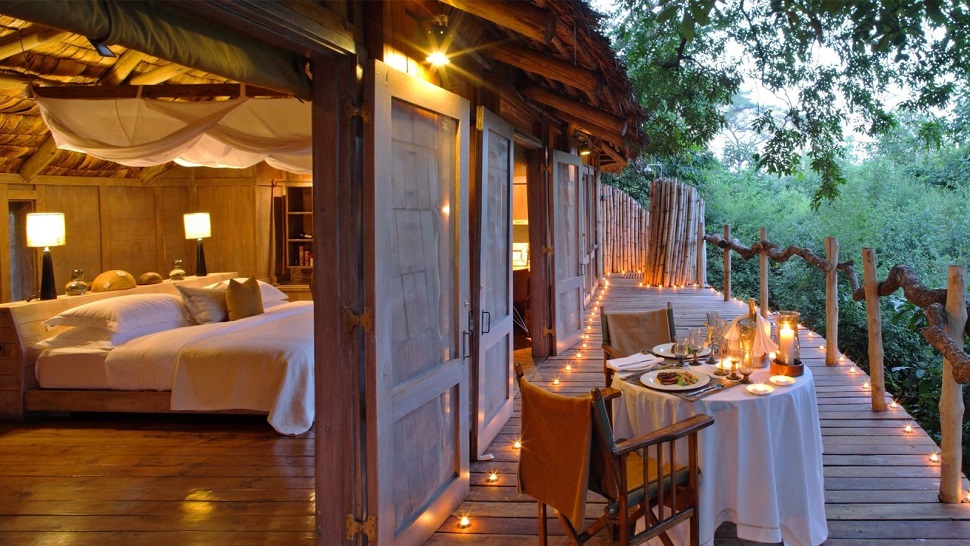
To evaluate the top forest luxury hotels in America, one must first dismantle the prevailing misunderstanding that “nature immersion” is a passive state. In high-end hospitality, immersion is a heavily engineered product. It is the result of thousands of micro-decisions—from the placement of a boardwalk to prevent soil compaction, to the acoustic engineering of walls that allow the sound of wind and birds to penetrate without letting in the mechanical hum of the HVAC.
The most common oversimplification in this space is the “rustic-luxury” conflation. However, the true luxury in a forest environment is “biophilic alignment”—the ability to feel connected to the ecology without the physiological stress of the elements. A property that offers extreme comfort but forces a disconnect from the forest is merely a hotel in the woods; a property that allows the guest to engage with the forest while maintaining a standard of “zero-friction” living is a true flagship asset.
Furthermore, the logistical reality of these locations is often misunderstood. A remote property requires an internal logistics network that rivals small towns. When evaluating what constitutes the “best,” one must look at the supply chain. Properties that internalize their operational dependencies are the ones that survive the logistical pressures of remote environments.
Deep Contextual Background: The Evolution of Woodland Estates
The American woodland estate has moved through three distinct eras. The first, the “Hunting Lodge Era,” prioritized utility and traditional aesthetics, often focusing on private acquisition of land for exclusive access to wildlife. The second, the “Wellness/Spa Era,” introduced the necessity of high-tech infrastructure—indoor climate control, fitness facilities, and advanced water treatment—forcing these properties to become more “industrial” in their back-of-house operations.
We are currently in the “Regenerative Era.” The modern flagship property is no longer just a place to stay; it is an active steward of the forest. These properties are leveraging sophisticated land-management practices, utilizing controlled burns, reforestation efforts, and carbon sequestration as part of their operational business model. The history of these assets has shifted from “conquering the wild” to “integrating with the ecosystem.” This evolution requires a level of architectural and operational sophistication that was absent in the lodges of the previous century.
Conceptual Frameworks and Mental Models
To evaluate potential destinations, utilize these frameworks to bypass the marketing noise:
-
The Canopy-to-Comfort Ratio: This assesses the degree to which the property utilizes the forest for thermal regulation and ambiance versus relying on mechanical systems. A property that uses passive solar gain and tree-cover cooling to reduce energy reliance is architecturally superior to one that fights the environment with heavy air conditioning.
-
The Logistical Friction Index: Calculate the distance from the nearest major supply hub against the property’s storage capacity. If a property is remote, it must have large, on-site warehousing for dry goods, spare parts, and fuel. Low storage capacity in a high-remoteness location is a sign of operational instability.
-
The Biophilic Integration Model: Evaluates how much of the guest journey is spent interacting with the ecosystem. The best assets use transition spaces—decks, glass bridges, covered walkways—to ensure the guest remains “in” the forest even when they are inside.
Key Categories and Variations of Asset Profiles
When surveying the landscape, woodland properties generally fall into these distinct operational archetypes:
Realistic decision logic indicates that the top forest luxury hotels in America are rarely the ones with the most “famous” names. Instead, they are the ones who manage their land with the highest degree of discipline.
Detailed Real-World Scenarios
Scenario 1: The “Supply Chain Severance”
A remote forest resort experiences a heavy storm that makes access roads impassable for 96 hours.
-
Decision: The property initiates its “Autonomous Operation Protocol,” utilizing on-site energy storage, massive food/fuel stockpiles, and internal maintenance teams to continue service without external intervention.
-
Failure Mode: A less prepared property faces service degradation, forcing the “closing” of amenities and a collapse of the luxury experience.
Scenario 2: The “Seasonal Flux” Adaptation
A forest property must transition from a summer high-traffic environment to a winter maintenance environment.
-
Decision: The property uses “Phased Shutdowns,” where entire sections of the estate are mothballed, and the heating/energy focus is shifted to the core “Winter Lodging” cluster.
-
Second-Order Effect: By concentrating the service footprint, the property maintains a higher service-to-guest ratio even during the off-season, preserving the “luxury” feel year-round.
Planning, Cost, and Resource Dynamics
The “Total Cost of Presence” (TCOP) for forest properties is structurally distinct from urban hotels.
-
Fixed Infrastructure: Power generation, water filtration, and sewage treatment are often internal costs.
-
The “Access Premium”: The cost of maintaining forest roads or specialized transport (e.g., 4×4 vehicles, boats) is a significant annual line item.
-
Environmental Stewardship: Costs associated with forest management (fire mitigation, invasive species control) are a necessary, non-revenue-generating expense for the best properties.
Tools, Strategies, and Support Systems
-
The “Invisible Staff” Strategy: Elite forest properties prioritize housing their staff on or near the site.
-
Modular Asset Management: Using standardized, replaceable components for guest cabins allows for rapid repairs. The best operators treat their cabins like aircraft; if a unit fails, they swap parts rather than performing field surgery.
-
Predictive Infrastructure Monitoring: Using sensors to monitor energy usage, water levels, and structural health of boardwalks/decks, allowing for maintenance to be performed before the guest notices a problem.
-
Proprietary Supply Procurement: Creating direct relationships with local, high-end farmers/artisans to ensure the supply chain is short, reducing the vulnerability to transport disruptions.
Risk Landscape and Failure Modes
There is a distinct taxonomy of risks associated with forest-based operations:
-
The “Infrastructure Drift”: When a property becomes so focused on the guest experience that it neglects the “boring” systems—water treatment, fire suppression, and road maintenance.
-
Fire Vulnerability: The single largest catastrophic risk. The top forest luxury hotels in America must have advanced, proprietary fire-suppression systems and clear, communicated evacuation plans.
-
Ecological Over-Extraction: When a property invites too many guests, the forest itself begins to degrade (soil compaction, loss of undergrowth). This leads to a loss of the “wild” feel that the guest paid for.
Governance, Maintenance, and Long-Term Adaptation
Treat your evaluation of these properties with the same governance as any major asset acquisition:
-
Audit Cycles: Perform an annual assessment. Are the boardwalks being maintained? Is the forest itself thriving, or does it look like a tourist-trampled park?
-
Adjustment Triggers: If a property has changed management, it typically undergoes a 12-month period of instability. Avoid properties currently in the middle of a major brand transition.
-
The Layered Checklist:
-
[ ] Verification of utility redundancy (on-site power/water independence).
-
[ ] Audit of the “biophilic” quality—does the design feel integrated, or merely “placed” in the woods?
-
[ ] Confirmation of the property’s forest management plan (who maintains the trees?).
-
Measurement, Tracking, and Evaluation
-
Leading Indicators: “Guest Engagement Velocity.” How quickly do guests disconnect from their digital lives and engage with the property’s activities?
-
Lagging Indicators: “The Amenity Integrity Check.” If the property promotes a “wild” experience but the hiking trails are poorly marked, or the equipment is outdated, it is a sign of an operations-first, guest-second focus.
-
Qualitative Signal: “The Acoustic Environment.” Does the property manage noise between cabins effectively? In a forest, sound travels. High-end estates have solved this through strategic landscaping and structural distancing.
Common Misconceptions and Oversimplifications
-
Myth: “The most isolated properties are always the best.” Correction: The most isolated properties are often the most difficult to operate. True luxury often sits at the intersection of “accessible isolation”—easy to reach, but impossible to see from the road.
-
Myth: “All-inclusive is standard.” Correction: High-end forest estates often prefer “consumption-based” models to maintain the quality of the raw ingredients and the exclusivity of the experiences.
-
Myth: “Woodland hotels are inherently sustainable.” Correction: A poorly managed woodland hotel can be an ecological disaster. Look for properties that are transparent about their land-management certifications.
-
Myth: “Any hotel in a forest is a ‘forest hotel’.” Correction: There is a fundamental difference between a property that is “in” a forest and one that is “of” the forest.
Ethical and Practical Considerations
There is a profound ethical obligation involved in the consumption of forest-based luxury. These environments are fragile. The top forest luxury hotels in America are those that operate as stewards of their land, not just consumers of it. Look for properties that have clear, measurable impacts on the local wildlife, that support the local community through employment and education, and that are transparent about their resource consumption. Choosing an unsustainable property is a failure of due diligence.
Conclusion
The pursuit of the top forest luxury hotels in America is an exercise in discerning the difference between the marketing of seclusion and the reality of infrastructure. It requires the traveler to look past the superficial beauty of the canopy and evaluate the property as a complex, self-contained organism. By applying a rigorous, audit-based approach—prioritizing logistical resilience, operational consistency, and ethical stewardship—one can find experiences that are not only luxurious but fundamentally transformative.