Best luxury hotels United States: A strategic audit for high-value travel.
The pursuit of the best luxury hotels united states market leaders is frequently framed as a quest for architectural splendor, brand prestige, or social cachet. This perspective is fundamentally archaic and often counterproductive to the goals of a sophisticated traveler. In the current operational landscape, luxury is rarely defined by aesthetic grandeur or the frequency of high-end social media features. It is defined by the property’s capacity for frictionless continuity, absolute privacy, and anticipatory service that integrates—rather than distracts—from the traveler’s primary mission.
The American hospitality sector is currently bifurcated. On one side exists the commoditized high-end tier, which relies on standardized, algorithmic processes that offer a consistent but often uninspired product. On the other side sits a nascent, highly resilient tier of properties—independent or deeply empowered by boutique management—that treat hospitality as a critical operational asset. For the traveler, the challenge is not to find a list of “top-rated” properties, which are often subject to the vagaries of subjective review ecosystems, but to cultivate the discernment required to identify environments that prioritize structural competence.
This article functions as a diagnostic audit of the American high-end sector. It moves beyond the consumer-facing marketing veneer to analyze the logistical frameworks, risk landscapes, and systemic requirements that separate a high-cost commodity from an experience that fundamentally shifts one’s operational baseline. By deconstructing the systemic requirements of a top-tier property, we provide a framework for vetting and selecting environments that will support, rather than distract from, the traveler’s objectives.
Understanding “best luxury hotels united states”
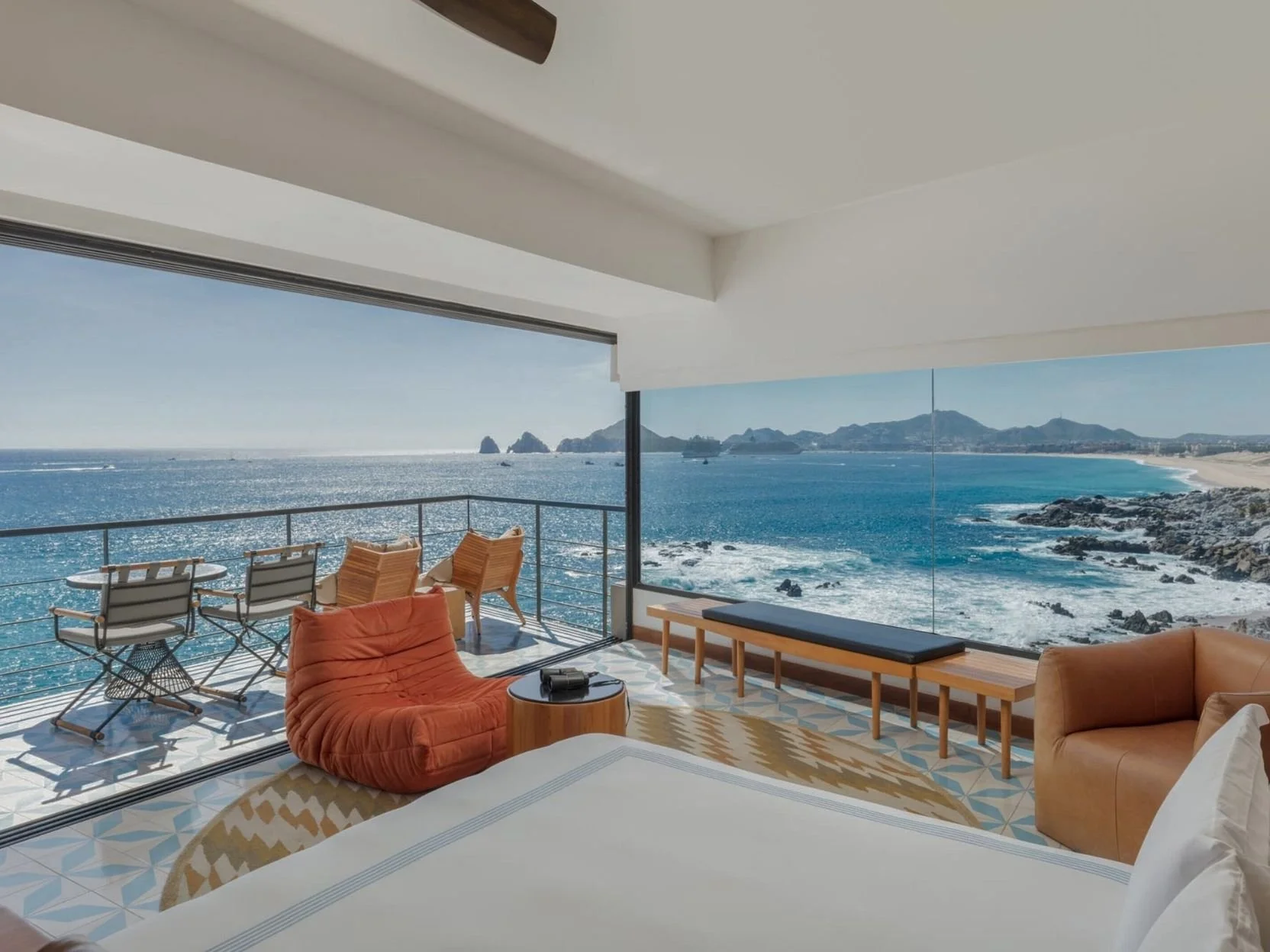
The term best luxury hotels united states is inherently a misnomer if it does not account for the traveler’s “Mission Profile.” A hotel that serves as the gold standard for a romantic retreat is frequently a failure for a high-stakes business negotiation or a recovery-focused wellness trip. When individuals conduct broad searches for the best luxury hotels united states, they often encounter a deluge of “Top 10” lists generated by lifestyle publications that prioritize aesthetics and influencer-friendly decor over the critical metrics of service recovery, data security, and infrastructural reliability.
To properly understand this designation, one must separate “Marketing Luxury”—the veneer of glamour—from “Operational Luxury,” which encompasses the structural capacity of the property. Operational luxury is evident in the depth of the concierge’s institutional knowledge, the robustness of the building’s power and communication redundancies, and the tenure of the senior staff. These are the elements that ensure consistency. A beautiful lobby is a fleeting amenity; a reliable, well-trained, and tenured staff is a permanent competitive advantage.
Furthermore, the misunderstanding of “value” plagues the process. Travelers frequently equate the rack rate with the quality of the stay. In truth, the pricing of the best luxury hotels united states is often tied to market demand, peak-season cycles, and brand positioning, none of which are perfect proxies for the actual quality of service delivery. By shifting the focus from price to performance, one gains a clearer view of what truly constitutes excellence in the American hospitality landscape.
Deep Contextual Background: The Evolution of American Hospitality
The history of American hospitality is a reflection of the country’s shifting economic infrastructure. The 19th-century “Grand Dame” hotels, situated at the termini of major railroad lines, were the original bastions of luxury. They served as social cathedrals, managing the flow of the elite through fixed, hierarchical service structures. This era established the foundational expectation for concierge services and fine dining that persists today.
The mid-20th century brought the age of standardization, where the goal was to provide a consistent experience across state lines. While this democratized access to comfortable lodging, it introduced a “corporate” service model that prioritized efficiency over the nuanced, anticipatory care of the earlier era. As we moved into the 2000s, the “boutique” revolution attempted to recapture the individual personality of the early hotels, though often at the cost of operational depth.
We are currently at a critical pivot point. The best luxury hotels united states properties in 2026 are those that have synthesized these eras: they possess the operational rigor of a major chain, the architectural soul of a boutique property, and a new, data-driven layer of hyper-personalized service that addresses the traveler’s specific, nuanced requirements. This convergence—scale, soul, and precision—is what separates the leaders from the laggards in the modern market.
Conceptual Frameworks and Mental Models
To identify the highest-performing environments, apply the following mental models:
-
The Friction-Utility Spectrum: Evaluate the property by the ratio of “guest effort” to “staff anticipation.” A perfect stay requires zero friction; the staff should neutralize needs before they are articulated.
-
The Institutional Tenureship Metric: High staff turnover is the silent killer of luxury. If a property is hemorrhaging staff, it is structurally impossible for them to deliver consistent, personalized service. Look for tenure as a proxy for institutional memory.
-
The Mission-Fit Framework: Do not select a hotel based on global prestige. Select it based on the requirements of your visit. A high-energy, design-forward urban hotel is perfect for a social trip but a failure for a sensitive, private consultation.
-
The Resilience-Dependency Model: Does the hotel rely on municipal infrastructure, or does it have internal redundancies? The most reliable properties function as self-contained operational environments.
Key Categories and Variations of Property Types
| Property Category | Primary Operational Focus | Best For |
| Urban Sanctuary | Privacy, Security, Connectivity | Business/Negotiation |
| Remote Estate | Wellness, Immersion, Ecology | Long-stay recovery |
| Heritage Landmark | Protocol, Architecture, History | Milestone events |
| Performance Lodge | Fitness, Adventure, Data | Athletic/Nature missions |
Realistic decision logic dictates that the categorization is not about exclusivity but about utility. When researching the best luxury hotels united states, categorize the property first: is it designed for high-throughput activity or low-throughput rest? The confusion between these two models leads to the majority of guest dissatisfaction.
Detailed Real-World Scenarios
Scenario 1: The High-Stakes Consultation
A client needs to conduct a sensitive, multi-day negotiation in a major American city.
-
Constraint: Absolute privacy, meeting-ready connectivity, and zero public-facing exposure are required.
-
Decision: The client bypasses the “socially vibrant” luxury hotels in favor of a legacy, white-glove property known for its “silent service” and dedicated security protocols.
-
Failure Mode: Selecting a design-forward, “influencer-friendly” hotel would expose the client to foot traffic, noise, and potential data interception.
Scenario 2: The Multi-Generational Milestone
A family seeks to host a landmark event.
-
Constraint: Varying accessibility needs and the requirement for diverse, on-site experiences for different age groups.
-
Decision: Choosing a “destination estate” with integrated concierge services that handle the logistics of the event, freeing the family from administrative burdens.
-
Failure Mode: Selecting a boutique city property with limited communal space, which would force the family to coordinate external venues and transport.
Planning, Cost, and Resource Dynamics
The “best” property is not necessarily the most expensive. It is the one that minimizes the indirect costs of travel.
| Cost Element | Direct Impact | Indirect Impact |
| Room Rate | Fixed (High) | Baseline |
| Service Friction | Variable (Low) | High (Loss of productivity) |
| Accessibility/Logistics | Moderate | High (Time waste) |
| Data/Security Failure | N/A | Extreme (Catastrophic) |
Budgeting for the best luxury hotels united states experiences requires accounting for the “Total Cost of Presence.” A $500/night property that wastes three hours of your time is significantly more expensive than a $1,200/night property that functions as a force-multiplier for your objectives.
Tools, Strategies, and Support Systems
-
The Pre-Arrival Dossier: Do not rely on the hotel’s “preference form.” Send a custom, bulleted list of requirements (room temperature, lighting preferences, connectivity needs, dietary restrictions) to the Director of Rooms.
-
The “Backdoor” Contact: For elite properties, the reservation line is the lowest-value channel. Build a relationship with the property’s sales office.
-
Loyalty Arbitrage: Consolidate your stays within a single high-end ecosystem to maximize status, which acts as a leverage tool when service recovery is needed.
-
Concierge Vetting: Test the concierge with a complex, off-property request three weeks before arrival. Their response time and accuracy are your lead indicator for the quality of the stay.
Risk Landscape and Failure Modes
The most significant risk is “Brand Drift”—when a hotel relies on its reputation to mask a decline in operational standards.
-
Capital Exposure: Properties that are not actively renovated or maintained on a strict schedule are often the first to fail.
-
Staff Turnover: A new General Manager often brings a new culture. If the GM has been in place for less than six months, the property is in a state of flux and high risk.
-
Experience-Security Conflict: Hotels that prioritize “open-concept” lobbies to look good on social media are inherently less secure. Evaluate the property’s access control mechanisms.
Governance, Maintenance, and Long-Term Adaptation
Treat your relationship with a preferred hotel as an operational partnership.
-
Quarterly Review: If you are a high-frequency traveler, maintain a database of your preferred properties. Note the staff who know your preferences and the operational issues encountered.
-
Adjustment Triggers: If a property fails to meet two consecutive requests, initiate a “Re-Vet” phase. Do not cling to a brand that has lost its operational standard.
-
The Layered Checklist for Booking:
-
[ ] Verification of secure Wi-Fi protocols (VPN required).
-
[ ] Confirm the tenure of the senior management team.
-
[ ] Audit the property’s policy on data privacy (Do they share your profile?).
-
Measurement, Tracking, and Evaluation
-
Leading Indicators: The responsiveness of the property to pre-arrival communication. If they ignore your dossier, they will ignore your needs.
-
Lagging Indicators: The frequency and speed of “Service Recovery.” When a system fails, how quickly does the property restore functionality without the guest needing to escalate?
-
Qualitative Signal: Do they recognize you by name and mission? A property that understands why you are there is fundamentally more useful than one that just knows your name.
Common Misconceptions and Oversimplifications
-
Myth: “The most famous hotel in the city is the best.” Correction: Famous hotels are often the most congested. The best property is often the one that the public doesn’t know about.
-
Myth: “Price is a proxy for service.” Correction: High pricing often pays for the brand’s marketing and overhead, not necessarily the depth of the concierge team.
-
Myth: “I don’t need to plan, the hotel handles everything.” Correction: The hotel handles standard requests. If you have non-standard needs, you must explicitly plan for them.
-
Myth: “Online ratings are reliable.” Correction: Reviews are biased toward the loud, not the professional. Ignore the aggregate score; look for specific operational failures in the comments.
Ethical and Practical Considerations
True luxury is sustainable and ethical. A property that mistreats its staff, maintains an opaque supply chain, or engages in environmentally destructive practices is, by definition, operating with a lack of integrity. This lack of integrity almost always leaks into the guest experience. The best luxury hotels united states options in 2026 are those that have aligned their operational performance with ethical responsibility; this alignment creates a culture of care that guests feel immediately upon arrival.
Conclusion
The selection of a high-end property is not a leisure decision; it is an allocation of resources designed to ensure that one can operate at the peak of their capability. By moving beyond the superficial metrics of marketing and toward an audit-based methodology, the sophisticated traveler can identify properties that provide more than just a bed—they provide an infrastructure for excellence. The best luxury hotels united states choices are those that have understood the fundamental shift in the market: that the future of hospitality is not about grandiosity, but about the seamless, silent, and rigorous delivery of a personalized operational environment.