Common luxury hotel amenity mistakes: A strategic audit of travel utility.
The modern luxury hotel room is often marketed as a dense repository of comfort: high-thread-count linens, curated minibar selections, bespoke bath products, and sophisticated digital interfaces. For the casual traveler, these elements are perceived as “perks” or “value-adds” designed to enhance the experience. However, from a strategic perspective, this perception is a primary source of travel friction. When amenities are treated as disparate items rather than integrated components of a room’s operational functionality, the guest loses agency over their own environment.
The accumulation of unvetted services—a high-tech lighting system that requires a manual, an automated room service protocol that creates noise disturbances, or a “club level” access that introduces logistical complexity—creates a chaotic ecosystem rather than a sanctuary. The challenge is not that these amenities are poor in quality, but that they are often ill-suited to the specific mission of the traveler. Success in modern luxury travel depends on the ability to distinguish between an amenity that facilitates the traveler’s objective and one that merely occupies space or adds cognitive load.
This guide acts as a professional audit of the luxury stay. It moves away from the consumerist view of “getting what you paid for” and toward an analytical framework of “utility management.” By identifying where expectations fail to meet operational reality, travelers can pre-emptively mitigate the friction that characterizes so many high-end stays.
Understanding “common luxury hotel amenity mistakes”
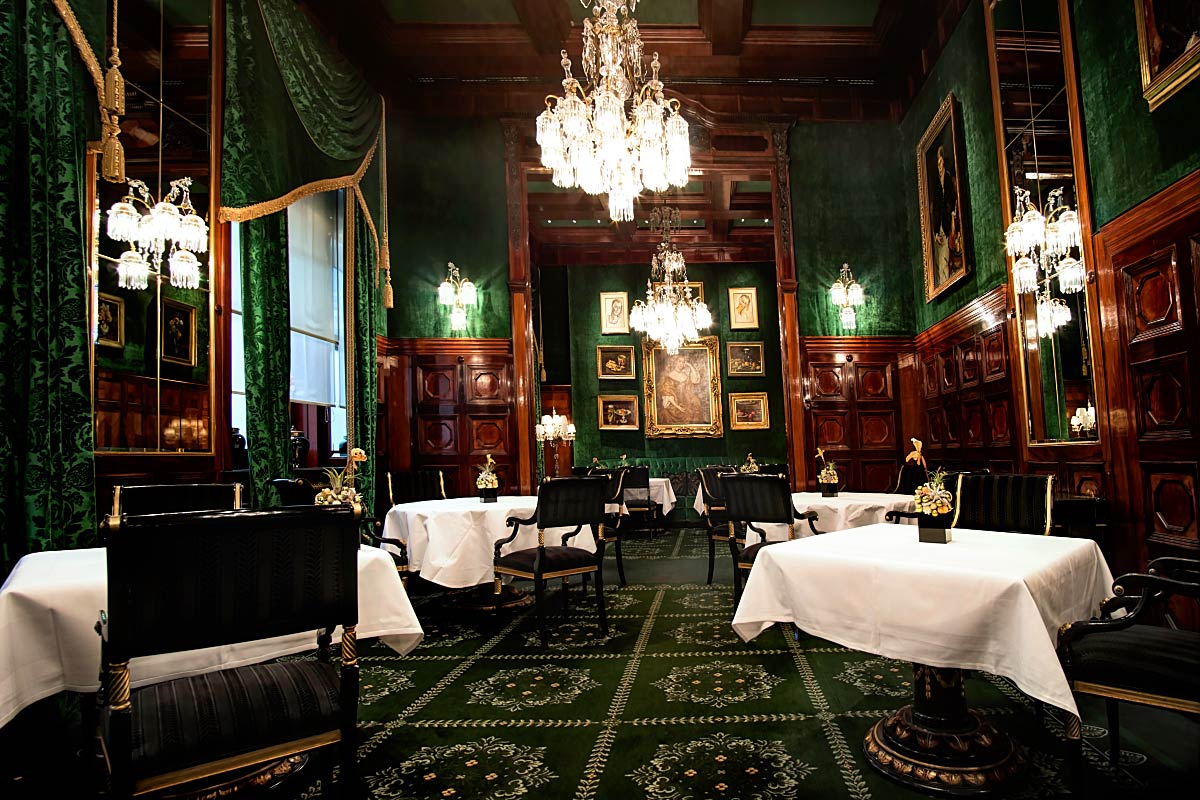
The fundamental driver of common luxury hotel amenity mistakes is the “Feature-Utility Mismatch.” Hotels are incentivized to pack rooms with features that sound impressive in marketing materials but serve no functional purpose for the guest. The “smart room” that requires three minutes of troubleshooting to dim the lights is a clear example of a feature designed for showroom appeal rather than operational utility. The mistake is twofold: the property installs complexity for the sake of branding, and the guest assumes that every feature is automatically an improvement.
Oversimplification is the secondary driver. Travelers often assume that “luxury” is a homogenous category. They believe that if they are staying at a five-star property, the amenities are intrinsically optimized for their needs. This ignores the reality of property-specific culture and management. A luxury hotel in a business district has a fundamentally different amenity mandate than a luxury resort in a remote coastal region. When a guest treats the amenities as a generic checklist, they inevitably overlook the specific operational profile of the property, leading to frustration when the “expected” service model is absent or misaligned.
Finally, there is the risk of “Amenity Passive-Aggression”—where the guest accepts features they do not need, only to be charged for them via resort fees or bundled rates. By not actively managing the amenity profile during the booking phase, the guest becomes a passive participant in the property’s revenue maximization strategy. Avoiding this requires moving from a role of “recipient” to “auditor.”
Deep Contextual Background: The Evolution of Amenity Culture
The history of hotel amenities is a shift from the tangible to the experiential. In the early 20th century, the luxury amenity was defined by basics: reliable heat, fresh linens, and efficient bell service. The mid-to-late 20th century introduced the “branded luxury” model—the personalized toiletry set, the high-end minibar, and the standardized concierge desk. This was the era of accumulation. Properties competed by adding more—more variety in the bath, more snacks, more magazines.
We are now in the integration era. The modern luxury traveler is less interested in the volume of goods provided and more interested in the fluidity of the service. The most sophisticated properties have realized that “more” is often “less.” The removal of the physical clutter—the magazines, the excess pillows, the confusing array of remotes—is now the ultimate luxury. Yet, many properties remain stuck in the accumulation phase, creating a dissonance where the high-end branding of the room clashes with the low-utility clutter of its contents.
Conceptual Frameworks and Mental Models
To evaluate amenities with professional rigor, apply these frameworks:
-
The Utility-Distraction Threshold: Any amenity that requires more than 30 seconds of learning (e.g., a complex sound system or a proprietary app) is a distraction, not a utility. It must be bypassed or ignored to preserve the guest’s cognitive focus.
-
The “Silent Service” Model: The best amenity is the one that functions without requiring interaction. If you notice the housekeeping service, it is a failure of timing. If you notice the smart-home interface, it is a failure of design.
-
The Amenity-Cost Correlation: Recognize that highly complex amenities (e.g., in-room espresso machines, digital concierge tablets) are frequently sources of operational failure. They require maintenance, updates, and troubleshooting. If the property’s maintenance cycle is lagging, these “luxury” items become sources of irritation.
Key Categories and Variations of Asset Profiles
When auditing a property, distinguish between Infrastructure Amenities (essential) and Peripheral Amenities (discretionary).
Decision logic: If an infrastructure amenity (like the thermostat) is failing, it is an immediate failure of the property. If a peripheral amenity (like the branded aromatherapy kit) is poor, it is irrelevant. Do not waste emotional capital on the irrelevant.
Detailed Real-World Scenarios
Scenario 1: The “Smart Room” Failure
A high-performance traveler checks into a room marketed as “AI-integrated.” The lighting, climate, and sound are controlled by a single tablet. The system hangs, leaving the room at a constant, freezing temperature.
-
Decision: The guest abandons the system immediately, calling the front desk for a manual override.
-
Failure Mode: Attempting to “fix” the system. The time cost is too high. The amenity has shifted from an asset to a liability.
Scenario 2: The Service Over-Engagement
A guest is booked into a “luxury suite” that includes a mandatory, pre-arrival “concierge call” to customize the room contents.
-
Constraint: The guest is busy and views this as an interruption, not a service.
-
Decision: The guest ignores the call, leading to a default setup they do not like, or they send a concise, standardized email defining their “do not touch” list.
-
Second-Order Effect: Managing the concierge team’s enthusiasm is part of the work of staying in a high-touch property.
Planning, Cost, and Resource Dynamics
The “Cost of Complexity” is a hidden variable in luxury travel.
-
Direct Costs: Resort fees, service charges attached to “complimentary” amenities.
-
Indirect Costs: Time spent troubleshooting, stress caused by noise (e.g., from an automated mini-bar restocking process), and the loss of workspace utility due to decor overload.
-
Resource Management: Treat your room space as a resource. If an amenity (like a bulky ornamental chair or a complex bar cart) impedes your movement or work, ask for it to be removed.
Tools, Strategies, and Support Systems
-
The Pre-Arrival “Cleanse”: 48 hours before arrival, email the Guest Relations manager. Request that the room be “cleared of all non-essential marketing materials, excess decorative items, and high-tech distractions.”
-
The Connectivity Test: Do not assume Wi-Fi is standard. Explicitly request an “un-partitioned, high-bandwidth connection” if your work requires it.
-
The Manual Override: Always request the location of physical switches for lighting and climate. Relying on digital interfaces is a primary source of common luxury hotel amenity mistakes.
-
Loyalty Preference Profiles: Update your profile to include a permanent “Minimalist Setup” flag.
Risk Landscape and Failure Modes
The “Over-Promise Trap” is the most dangerous risk.
-
The “Tech-Decay” Risk: High-tech amenities age poorly. A property that was “cutting edge” five years ago is now just “broken.” Avoid properties that use “technology” as their primary marketing pillar.
-
The Maintenance Lag: Luxury properties often focus on the public-facing areas (lobby, restaurant). The room’s “hidden” amenities—like the plumbing or the HVAC system—are often neglected.
-
The “Staff-Reliance” Risk: Amenities that require staff intervention (e.g., turn-down service, luggage delivery) are only as good as the staff training. If the property has high turnover, these are the first services to degrade.
Governance, Maintenance, and Long-Term Adaptation
Treat your relationship with a preferred property as a portfolio that needs active management.
-
Audit Cycles: If a property consistently fails to deliver on its amenity promises (e.g., internet fails, minibar is wrong), do not return. The cost of retraining them is too high.
-
The Amenity Checklist: Develop a personal checklist for your stays. Does the room meet the “Quiet, Dark, Connected” standard?
-
Adjustment Triggers: If you spend more than 15 minutes in any stay correcting amenity failures, initiate a “Re-Vet” of that property.
Measurement, Tracking, and Evaluation
-
Leading Indicators: The quality of the pre-arrival communication. If they ask specific, intelligent questions about your needs, they are likely to manage their amenities well.
-
Lagging Indicators: The “Troubleshooting Ratio.” How many interactions did you have with the staff regarding the room’s features?
-
Qualitative Signal: “Operational Transparency.” Did the room “disappear” so you could focus, or did it constantly demand your attention?
Common Misconceptions and Oversimplifications
-
Myth: “Branded toiletries are a sign of quality.” Correction: Often, they are just a partnership deal. Look at the plumbing quality, not the soap brand.
-
Myth: “The most expensive room has the best amenities.” Correction: The most expensive room often has the most amenities, which increases the likelihood of operational failure.
-
Myth: “I must use the room service.” Correction: Your room is your sanctuary. You have no obligation to engage with the property’s F&B ecosystem.
-
Myth: “The concierge is a miracle worker.” Correction: The concierge is a human with a limited network. Manage your expectations.
Ethical and Practical Considerations
In the context of common luxury hotel amenity mistakes, one must consider the environmental impact. The obsession with single-use “luxury” items—tiny plastic bottles, individually wrapped linens, excess paper—is increasingly untenable. Sophisticated travelers are shifting toward properties that use bulk-dispense high-end products and sustainable protocols. Recognizing this is not just about ethics; it is about recognizing which properties are operationally modern and which are clinging to a wasteful, outdated definition of luxury.
Conclusion
Mastering the use of amenities is about moving from a role of “passive recipient” to “active architect” of your environment. By identifying the common luxury hotel amenity mistakes—the obsession with quantity over quality, the reliance on unvetted technology, and the failure to customize the room setup—you can reclaim the efficiency and focus that characterize truly successful travel. The goal is not to demand more from the hotel; the goal is to demand less clutter, less complexity, and more reliable performance. True luxury is not found in the presence of an amenity, but in the absence of an impediment.