How to reduce luxury hotel food expenses: A strategic audit of F&B overhead.
The expenditure associated with food and beverage (F&B) within the luxury hospitality sector is frequently misunderstood as a simple consumption cost. In reality, these charges represent a complex convergence of logistics, labor, inventory, and opportunity cost. When a traveler assesses their folio, the line items for breakfast, room service, or minibar usage are often viewed as discretionary or secondary. However, from the perspective of the property, F&B is a meticulously engineered revenue center, designed to maximize margin on low-volume, high-complexity operations. To approach this from a position of authority, one must first discard the consumer-facing notion that high prices equate to superior quality. Often, they merely equate to the high operational friction inherent in delivering service to a centralized, captive environment.
Reducing the financial impact of these expenses requires a shift in mindset: moving from a passive consumer to an active logistics manager. The objective is not to adopt a lifestyle of deprivation or to compromise the quality of one’s experience. Rather, the goal is to identify systemic inefficiencies in how hospitality F&B is priced and delivered, and then to optimize one’s interaction with those systems. By auditing the structure of these costs—understanding when one is paying for sustenance versus when one is paying for the immense overhead of convenience—the traveler can reclaim a significant portion of their travel budget without sacrificing the standard of their stay.
This article functions as a comprehensive diagnostic manual. It explores the systemic evolution of hotel dining, provides conceptual frameworks for cost management, and details the strategic shifts required to manage these costs effectively. By treating F&B expenditures as a category of corporate or personal asset management, the reader can transform a significant travel liability into a controlled, optimized operational component.
Understanding “how to reduce luxury hotel food expenses”
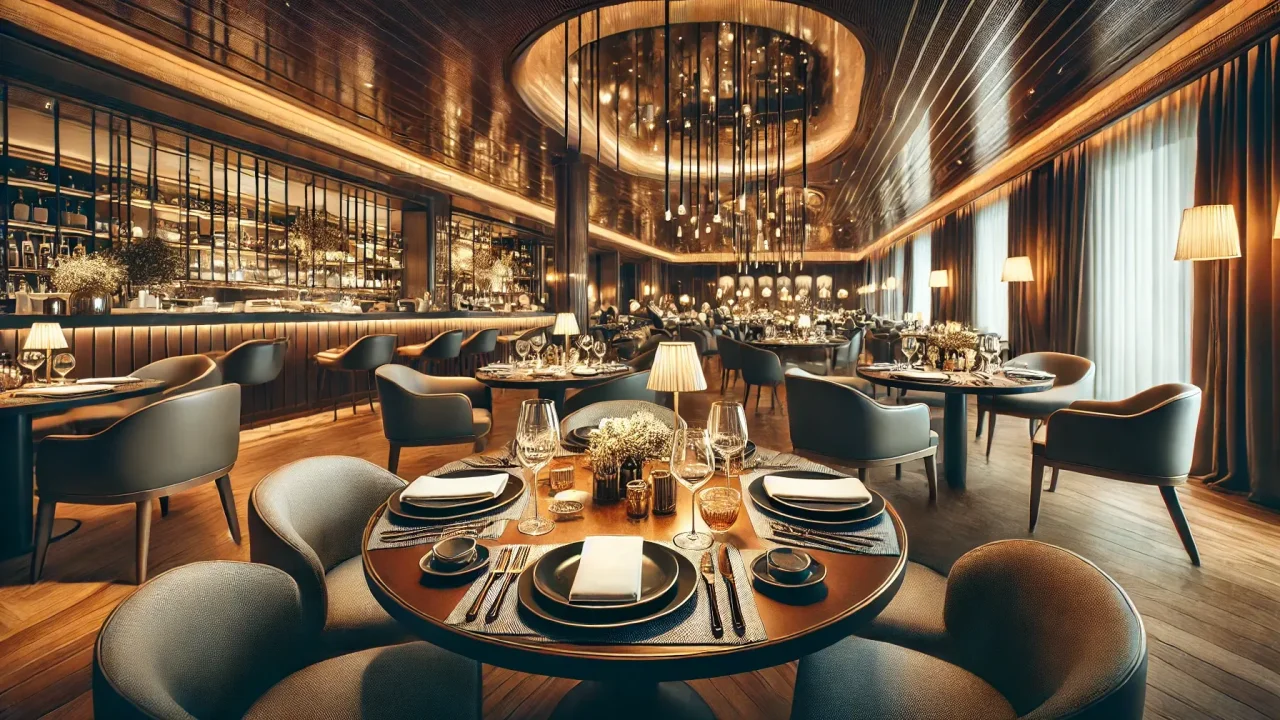
The challenge of how to reduce luxury hotel food expenses is fundamentally a challenge of recognizing where value is created and where it is merely consumed. The common misunderstanding is that the hotel’s pricing is tied to the intrinsic quality of the ingredients. While luxury properties do source high-end produce, a significant portion of the cost is attributable to the infrastructure of delivery: the kitchen’s 24-hour readiness, the staffing required to manage room service logistics, and the high-maintenance environmental controls of the restaurant space. When one pays for a $50 breakfast, one is paying 20% for the ingredients and 80% for the capacity of the property to have that meal available at one’s preferred time.
Oversimplification leads to the most common failure: attempting to cut costs by simply avoiding hotel dining entirely. While this is mathematically effective, it often leads to what can be termed “logistical fatigue.” If a traveler spends their limited energy and time traversing a city to find cheaper food, the hidden cost—the loss of time, the disruption of workflow, and the reduction in physiological recovery—often exceeds the nominal savings.
Success requires a nuanced assessment of the property’s F&B ecosystem. Does the hotel view dining as a profit center or as a guest amenity? How does the “Club Level” or “Executive Lounge” impact the total cost of ownership of the trip? By viewing the hotel’s food operations as a supply chain, one can identify gaps, redundancies, and leverage points that the average guest remains blind to, thereby achieving a more efficient expenditure model without the loss of comfort or capability.
Deep Contextual Background: The Evolution of Hotel F&B
Historically, the “Grand Hotel” functioned as a complete, self-contained ecosystem. In the 19th and early 20th centuries, F&B was considered an essential service, akin to housekeeping; it was bundled into the experience. As the hospitality industry professionalized and diversified in the mid-20th century, properties began to unbundle their services. F&B was treated as a separate P&L (profit and loss) center. This shift was profound. It necessitated that the F&B division operate as an independent business, often outsourcing its operations to third-party management firms, which prioritized aggressive margin generation over guest convenience.
This separation created the modern “Hotel Pricing Paradox,” where the price of a standard bottle of water or a continental breakfast is decoupled from local market reality. It is priced instead according to the “captive nature” of the guest. The current era of hospitality is witnessing a partial reversal of this, as high-end properties realize that “guest friction”—frustration over exorbitant pricing—can negatively impact brand loyalty. However, the structural reality remains: the infrastructure cost is high, and the hotel must recoup it. Understanding this history is crucial; it explains why hotel dining is inherently expensive and why “bargaining” is largely ineffective, while “systemic optimization” is highly effective.
Conceptual Frameworks and Mental Models
To master this domain, apply these analytical frameworks:
-
The Utility-Friction Ratio: Every meal option must be evaluated by the amount of friction it introduces to the schedule. If a cheaper external meal requires 45 minutes of transit, it has a negative Utility-Friction Ratio. The goal is to identify meals that provide sustenance with minimal time-cost.
-
The “Club” Parity Model: Evaluate the price of an executive club or lounge membership against the cost of your average daily F&B spend. In many properties, the premium for lounge access covers breakfast, evening appetizers, and beverages, making it an economically superior choice compared to paying à la carte.
-
The Inventory-Avoidance Strategy: Recognize that minibar and room service are the highest-margin, lowest-utility segments of the hotel’s F&B department. These are the primary “avoidance zones.”
-
The External Integration Model: View the local area within a 5-minute radius of the hotel as an extension of the property’s dining capacity. If the property’s F&B cost is high, the nearby external ecosystem is your primary counter-strategy.
Key Categories and Variations of Cost Profiles
| Category | Typical Cost Structure | Margin Driver | Utility Value |
| In-Room Dining | Extreme (Markup + Svc Fee) | Logistics/Labor | High (Privacy) |
| Lounge/Club Access | Fixed (Bundle) | Volume/Efficiency | High (Productivity) |
| Hotel Restaurant | High (Premium) | Ambiance/Brand | Moderate (Social) |
| External/Delivery | Moderate (Market-rate) | Convenience | Moderate (Logistics) |
Realistic decision logic dictates that when you are on a high-stakes trip, you should prioritize the “Lounge Access” and “External Integration” models. These allow for predictable costs and high logistical efficiency, avoiding the chaotic, high-cost spikes of room service or unvetted hotel dining.
Detailed Real-World Scenarios
Scenario 1: The High-Intensity Business Trip
A professional travels for a three-day summit where time is the most constrained resource.
-
Constraints: No time to leave the property; need for rapid, predictable meals.
-
Decision: The traveler secures a room rate that includes club lounge access.
-
Second-Order Effect: Breakfast and evening meals are effectively pre-paid. The total F&B spend is reduced by approximately 60% compared to paying à la carte, while productivity is maximized by remaining on-site.
Scenario 2: The Multi-Day Urban Project
A team conducts a week-long project in a city with a robust local dining scene.
-
Constraints: Requirement for sustained energy; fatigue from hotel dining; budget control.
-
Decision: The team identifies three high-quality external venues within walking distance for lunches and dinners, utilizing the hotel only for breakfast.
-
Failure Mode: Attempting to force room service for every meal would have led to “palette fatigue” and an bloated expense account, jeopardizing project morale and financial targets.
Planning, Cost, and Resource Dynamics
The economic management of F&B requires a shift in how one treats the “Folio.”
| Cost Variable | Financial Impact | Strategy |
| Breakfast | Daily High | Bundle into Rate / Lounge Access |
| Minibar | Extreme (Per-Unit) | Avoid / Audit |
| Room Service | High (Labor/Svc) | Limit to “Work-Flow Essential” |
| Lounge Access | Fixed (Pre-pay) | Maximize Utility |
The key is to front-load your F&B strategy during the booking phase. The most significant savings on how to reduce luxury hotel food expenses occur before you even check in, through the selection of the correct room type or package.
Tools, Strategies, and Support Systems
-
Loyalty Tier Optimization: In many cases, top-tier loyalty status grants complimentary breakfast and lounge access. The value of this benefit often outweighs the cost of the higher room rate.
-
Credit Card Perks: Use travel-centric credit cards that offer specific food/beverage credits at luxury properties. These are effectively “pre-paid” discounts that lower the net cost.
-
The “Pre-Arrival Pantry”: For extended stays, a modest delivery of staples (water, fruit, nuts, energy bars) to the room can eliminate the need for costly minibar snacks.
-
Local Partnerships: Some high-end properties have relationships with nearby, high-quality restaurants. Ask the concierge for “recommended alternatives”—this is often a subtle signal that the hotel’s own dining is overpriced.
Risk Landscape and Failure Modes
The primary failure mode is “The False Economy of Time.”
-
The Transit Tax: Spending two hours searching for a $10 meal that saves you $15 compared to an in-house option is a net loss of $500 in productive time (assuming a high-value professional hourly rate).
-
Service Degradation: Opting out of hotel dining to save money can sometimes lead to reduced recognition from staff. If you are entirely self-reliant, the concierge and guest relations team have fewer opportunities to provide “silent, anticipatory service.”
-
Health and Fatigue: Consistently choosing low-quality external food to cut costs leads to physical fatigue, which impacts the performance of the trip’s objectives.
Governance, Maintenance, and Long-Term Adaptation
Treat your travel food budget as a portfolio.
-
Audit Cycle: After every trip, review the F&B line items on your folio. Were they justified? Did they add value to the mission?
-
Adjustment Triggers: If you find that 30% of your F&B spend was on items you didn’t enjoy or that provided no logistical benefit, you need to tighten your pre-arrival planning.
-
The Layered Checklist:
-
[ ] Did I verify the breakfast inclusion?
-
[ ] Did I secure lounge access?
-
[ ] Have I identified one high-quality, external dining “anchor” near the property?
-
Measurement, Tracking, and Evaluation
-
Leading Indicators: The cost-per-meal in your pre-arrival plan. If you have a plan, you will likely stick to it.
-
Lagging Indicators: The final Folio F&B total. This should ideally be within 10-15% of your pre-trip budget.
-
Qualitative Signal: Your physical and mental state. If you are exhausted, your food logistics strategy has failed, regardless of the money saved.
Common Misconceptions and Oversimplifications
-
Myth: “The minibar is for guest convenience.” Correction: The minibar is a high-margin inventory capture tool.
-
Myth: “Free breakfast is always better.” Correction: If the breakfast is subpar, you are still “paying” with your time and health. Sometimes, a high-quality external coffee and pastry is superior.
-
Myth: “Ordering room service is lazy.” Correction: Ordering room service is a strategy for preserving focus and privacy. It is an investment in productivity.
-
Myth: “Eating in the lounge is low-class.” Correction: Eating in the lounge is the most sophisticated way to manage time and cost.
Ethical and Practical Considerations
There is an ethical dimension to hotel dining. Properties rely on their F&B operations to sustain their staff during slow seasons. When you choose to eat off-property, you are essentially “leaking” revenue from the property. While this is your right, recognizing this allows for a balanced approach. If you intend to stay at a property for a long duration, consider utilizing their F&B services occasionally—it maintains a positive relationship with the staff and helps ensure that the property remains viable and service-oriented for your future needs.
Conclusion
Understanding how to reduce luxury hotel food expenses is not about practicing austerity within an environment of opulence; it is about applying professional rigor to a category of expenditure that is often managed through habit and neglect. By implementing a proactive strategy—bundling F&B costs during booking, utilizing executive lounges, and maintaining a high standard for external dining—the traveler can significantly improve the efficiency of their travel budget. The ultimate goal is to remove the “F&B friction” from the trip, ensuring that you remain fueled and focused on your primary objectives, without the distraction of poorly allocated resources. The most effective travelers do not count pennies; they manage systems.