Compare luxury hotel amenities: A strategic audit of operational utility.
The pursuit of excellence in travel is frequently derailed by the superficial evaluation of property features. Travelers often equate the volume of offerings—high-thread-count linens, artisanal minibars, or proprietary bath products—with the intrinsic quality of a hotel. This approach relies on the assumption that an “amenity” is a passive benefit, a static gift bestowed upon the guest to enhance comfort. Such a perspective is fundamentally archaic and obscures the more vital reality: amenities are operational tools designed to facilitate, or at times hinder, the traveler’s primary objectives.
When one sets out to evaluate a property, the methodology must shift from counting items to assessing systems. A hotel is not merely a collection of features; it is an integrated environment where every service and physical object serves a specific, albeit often unstated, purpose. The goal of a sophisticated traveler is not to find a property with the longest list of features, but to identify the environment where the amenities are meticulously aligned with the specific requirements of the stay. Failing to account for this structural alignment results in a fragmented experience, regardless of how premium the individual components may appear on a marketing brochure.
This article functions as a diagnostic audit of the luxury sector. It provides the analytical frameworks necessary to dissect property offerings, stripping away the varnish of marketing rhetoric to expose the underlying operational competence—or lack thereof. By focusing on the utility, maintenance, and integration of these offerings, we provide a robust methodology for auditing the properties that claim to define the elite tier.
Understanding “compare luxury hotel amenities”
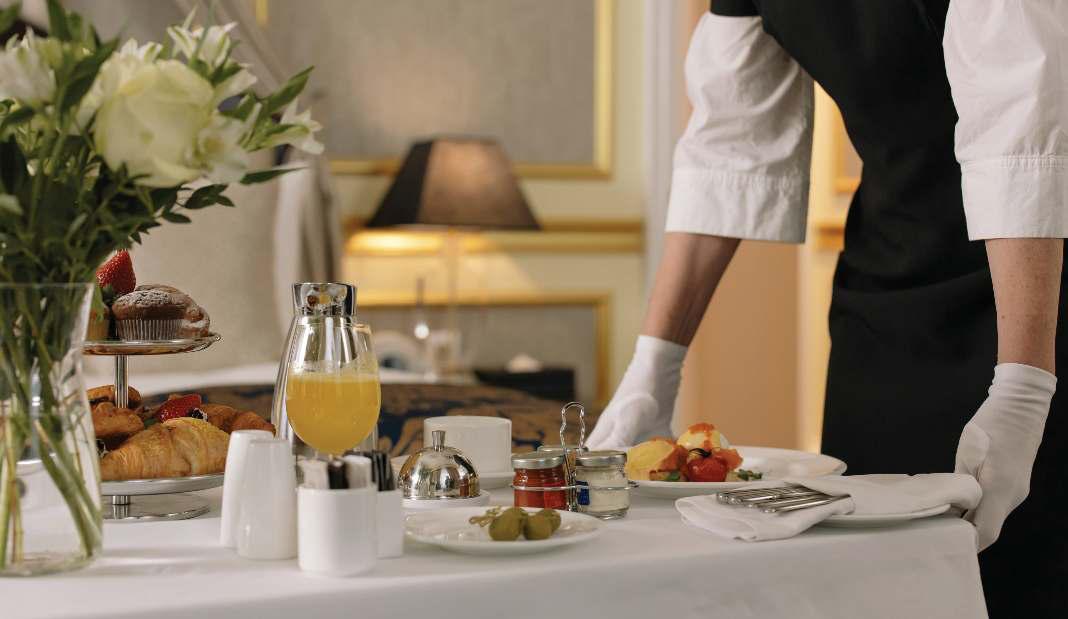
To effectively compare luxury hotel amenities, one must first discard the consumer-facing paradigm that treats them as rewards. In the context of elite hospitality, an amenity is an operational support system. A high-end espresso machine is not a perk; it is a mechanism for maintaining a specific, necessary level of physiological alertness during a high-stakes trip. A dedicated, in-suite fitness rig is not a vanity item; it is a tool for recovery and performance. Misunderstanding these tools as mere decorations leads to poor decision-making, where a guest selects a property based on features they will never utilize, while ignoring the systemic deficiencies that will directly impact their productivity.
The primary risk in this comparative process is the “Feature-Utility Mismatch.” Many properties, particularly those in the “lifestyle luxury” segment, prioritize novelty over reliability. They install complex, bespoke digital interfaces that are prone to failure, or they stock rooms with hyper-specific, trendy consumables that provide little actual utility. A property that is filled with broken “smart” controls or unserviced niche equipment is, for the professional traveler, a liability.
Furthermore, the comparison process is often clouded by the “Brand Halo Effect.” Travelers assume that because a property belongs to a prestigious global group, its amenities will be uniform in quality. This is an empirical error. The actual experience of an amenity—the quality of the Wi-Fi, the responsiveness of the lighting system, the freshness of the minibar inventory—is entirely dependent on the specific management team at that location. One cannot simply compare brands; one must evaluate the operational culture of the individual asset.
Deep Contextual Background: The Evolution of the Elite Infrastructure
Historically, the “luxury hotel” was a sanctuary of stability. Amenities were physical and tangible: stationary, fine china, and dedicated staff members. The evolution into the modern era introduced a massive shift toward “experience-based” amenities—services that are ephemeral and performance-driven. This shift was fueled by the rise of global mobility, where the hotel became a satellite office and a secondary residence for the world’s elite.
In the 20th century, the hallmark of the elite property was the “Grand Dame”—a hotel where amenities were focused on preservation and protocol. The staff performed tasks for the guest. Today, the focus has shifted to “enabling” the guest. We now see an emphasis on hyper-connectivity, secure data environments, and wellness-focused integration. The luxury hotel of 2026 is less a passive destination and more of a proactive, responsive environment. This evolution necessitates a completely new approach to assessment. We are no longer comparing velvet drapes; we are comparing the systemic reliability of the building’s operational infrastructure.
Conceptual Frameworks and Mental Models
To evaluate properties with precision, one must apply specific mental models that isolate performance from marketing:
-
The Friction-Utility Index: Every amenity creates a specific amount of friction. A “high-tech” room control system that requires a 15-minute learning curve represents negative utility. Evaluate whether the feature solves a problem or creates a new one.
-
The “Staff-to-Asset” Dependency: A premium amenity is only as good as the staff capable of maintaining and explaining it. If the property installs a specialized spa rig but lacks trained staff to operate it, the asset is worthless.
-
The Institutional Decay Rate: Every physical amenity has a lifespan. A luxury amenity that is not on a rigorous, documented replacement cycle (e.g., HVAC filters, electronics, soft goods) is an amenity in the process of becoming a liability.
-
The Mission-Fit Framework: An amenity is objectively “good” only in relation to your goal. If you are conducting a high-stakes negotiation, a high-design lobby bar is a distraction; a silent, private suite is the essential asset.
Key Categories and Variations of Asset Profiles
When examining the market, it is helpful to group offerings into categories of utility. The following table identifies core amenity archetypes and their associated operational risks.
Realistic decision logic dictates that you should prioritize the “hard” assets (connectivity, furniture, climate control) over the “soft” assets (decorative art, branded bathrobes). You can operate in a room without a decorative pillow; you cannot operate in a room with failing network infrastructure.
Detailed Real-World Scenarios
Scenario 1: The Secure Consultation
A business unit requires a space for a high-stakes, multi-day meeting in an urban center.
-
Constraints: Data security, soundproofing, and privacy are non-negotiable.
-
Decision: The unit ignores properties that focus on “lifestyle/influencer” amenities and selects a “Heritage/Legacy” property known for its structural silence and hardened, private-access floor protocols.
-
Failure Mode: Selecting a trendy, glass-walled suite with “open concept” common areas would have compromised the confidentiality of the consultation.
Scenario 2: The Recovery Stay
A long-haul traveler requires 72 hours of physiological recovery before a major event.
-
Constraints: Air quality, light control, and silence are the priority assets.
-
Decision: The traveler bypasses city-center hotels and selects a property with advanced HVAC systems and blackout-compliant window sealing, specifically auditing the property’s “Sleep Hygiene” protocols.
-
Failure Mode: Choosing a centrally located property, regardless of the amenity list (like a rooftop pool or fine dining), would have failed to meet the physiological requirement for recovery due to ambient noise.
Planning, Cost, and Resource Dynamics
The “Total Cost of Presence” often dwarfs the nightly room rate. When you compare luxury hotel amenities, you must factor in the indirect costs of amenity failure.
If an amenity requires you to spend two hours of your own time coordinating a fix (e.g., bad internet), the “cost” of that amenity is effectively higher than the room rate itself.
Tools, Strategies, and Support Systems
-
The “Pre-Arrival Infrastructure Audit”: Contact the property’s Director of Rooms. Ask specific questions about the age of the IT equipment and the maintenance schedule of the climate control systems.
-
The Direct Sales Engagement: If you are booking multiple stays, work through the sales office rather than the central reservation system. They have the authority to allocate rooms with specific, verified amenity sets.
-
Hardware Redundancy: Always travel with your own connectivity kit (router, VPN, power banks). Never rely on hotel “connectivity” as your primary line of defense.
-
Institutional Memory Tracking: Maintain a private database of your stays, noting which properties have maintained their amenities and which have allowed them to decay. Use this to inform future bookings.
Risk Landscape and Failure Modes
The “Invisible Decay” of luxury is a significant threat.
-
The Maintenance Gap: Properties that emphasize “experiential” design often lack the technical infrastructure to maintain it. A complicated, app-based lighting system that was installed three years ago and has not been updated is a source of frustration, not luxury.
-
Staff Turnover: A new management team may be unaware of the specific, documented “kinks” in the property’s systems. If the property has had a change in GM in the last six months, consider it “high risk.”
-
Security vs. Aesthetics: Properties that prioritize “open and airy” designs often sacrifice physical security and acoustic privacy. When you compare luxury hotel amenities, prioritize the “boring” features—solid doors, thick walls, and independent connectivity—over the “exciting” ones.
Governance, Maintenance, and Long-Term Adaptation
Treat your preference for a hotel as an evolving portfolio that requires periodic review.
-
Audit Cycles: Re-verify your preferred properties annually. An asset that was “best-in-class” last year may have been sold or undergone a budget-cutting initiative that slashed maintenance protocols.
-
Adjustment Triggers: If a key amenity—such as the in-room workspace or connectivity—fails to meet the standard twice in one year, initiate a “Re-Vet” phase. Do not allow past experiences to blind you to current realities.
-
The Layered Checklist:
-
[ ] Verification of network security protocols.
-
[ ] Assessment of physical maintenance (scuffs, loose hardware, outdated software).
-
[ ] Review of staff response to non-standard amenity requests.
-
Measurement, Tracking, and Evaluation
-
Leading Indicators: The responsiveness and technical precision of pre-arrival email communication. If they can answer a technical question about the room’s features quickly, the property is well-managed.
-
Lagging Indicators: The “Service Resolution Speed.” If an amenity fails, how long does the property take to provide a functional alternative or a fix?
-
Qualitative Signal: “Silent Recognition.” The best environments know your preference for temperature, lighting, and workspace configuration without you having to ask.
Common Misconceptions and Oversimplifications
-
Myth: “The ‘Smart Room’ is the future of luxury.” Correction: The “Smart Room” is often a source of immense friction. Simplicity and reliability are the ultimate luxury.
-
Myth: “More amenities mean a better property.” Correction: A property with fewer, highly reliable amenities is objectively superior to one with a bloated, partially functioning list of features.
-
Myth: “The star rating defines the amenity quality.” Correction: The star rating defines the scope of services, not the reliability or quality of the execution.
-
Myth: “I can fix it when I get there.” Correction: You cannot fix systemic infrastructure failure. You can only avoid it.
Ethical and Practical Considerations
True luxury is rooted in the sustainability of the human labor behind the amenities. A property that pushes its housekeeping and maintenance staff to the point of exhaustion to maintain a façade of perfection is inherently fragile. You will feel this fragility in the service—the lack of detail, the rushed interactions, and the “good enough” attitude. When you compare luxury hotel amenities, look for properties that demonstrate a deep respect for their operational staff, as this environment of care inevitably transfers to the level of service you receive.
Conclusion
The selection of a high-end property is not a leisure choice; it is an allocation of resources designed to ensure you can operate at the peak of your capability. By moving beyond the superficiality of marketing checklists and adopting an audit-based methodology, you can identify environments that provide real-world utility. The most resilient travel strategy acknowledges that amenities are tools, not trophies, and that the ultimate luxury is a frictionless, responsive environment that allows you to focus on your mission, undisturbed by the technical or systemic failures of your surroundings.