Best luxury hotels for couples: A strategic audit of relational hospitality.
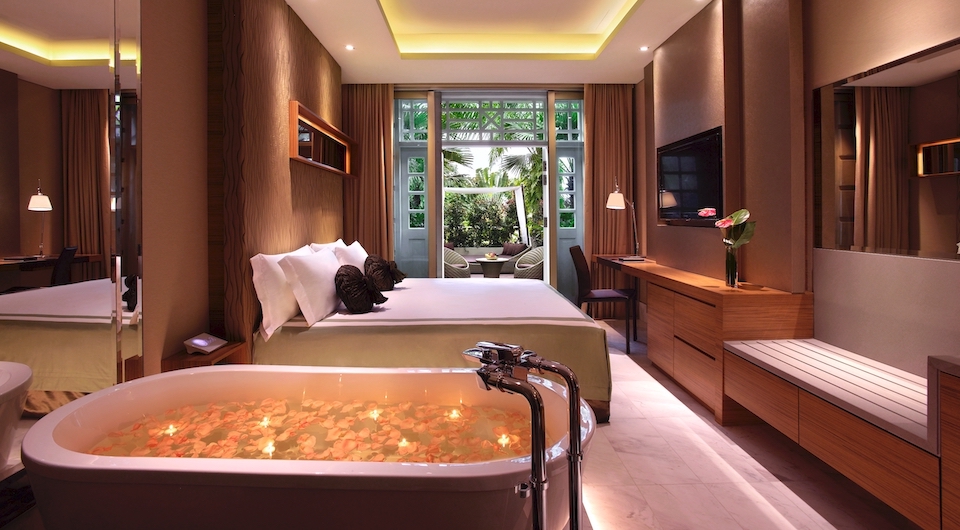
The conventional discourse surrounding elite travel for pairs is dominated by aesthetics: the presence of rose petals, the exclusivity of a balcony view, or the proximity to a landmark. This focus is a category error. For the sophisticated traveler, the environment of a property is not a backdrop for an experience; it is an active participant in it. The most successful stays are not defined by the tangible amenities provided, but by the absence of friction and the preservation of intimacy. When two people travel, the hotel acts as a third entity—a container for their time, attention, and interaction.
The challenge in identifying the best luxury hotels for couples lies in moving past the superficial layer of “romantic” branding. Most marketing materials for high-end properties are designed to appeal to a generic, aspirational demographic. They emphasize visual cues that often correlate with high occupancy and high public turnover—elements that are, by definition, antithetical to genuine privacy and concentrated shared experience. A hotel designed for a high-volume “honeymoon” crowd is frequently a high-stress, low-privacy environment, regardless of the quality of the linens.
This article serves as a diagnostic audit. It moves away from the subjective concept of “romance” and toward the objective analysis of hospitality infrastructure. By examining how specific properties manage service fluidity, soundproofing, and access control, this guide provides a framework to assess whether a property is truly optimized for a high-intensity, shared journey, or if it is merely a high-cost commodity leveraging a prestigious address.
Understanding “best luxury hotels for couples”
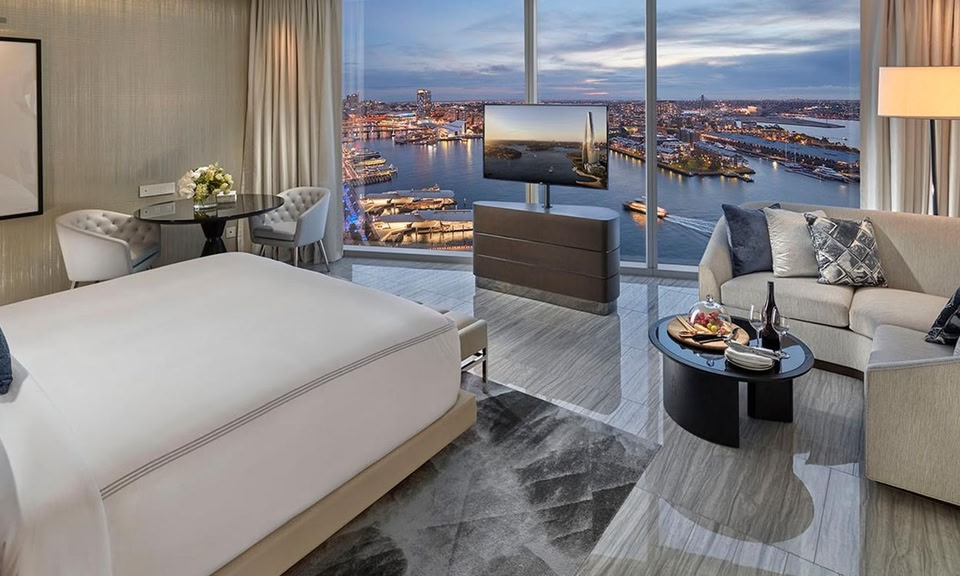
The designation of best luxury hotels for couples is frequently misused in travel media, serving as a catch-all for any property with a high price point and a “couples massage” on the menu. To understand the category, one must strip away the marketing layer and examine the “Privacy-Proximity Ratio.” A truly elite property for a pair is defined by its ability to neutralize the external environment. Whether the location is a dense urban center or a remote enclave, the operational duty of the hotel is to provide a “hardened” space where the focus can remain internal to the relationship, undisturbed by the logistics of the hotel itself.
Common misunderstandings center on the idea that these properties are static. In reality, they are dynamic, high-maintenance environments. A hotel that is excellent for a pair in the off-season may be disastrous during peak occupancy when the public-facing areas become overwhelmed. The “best” properties are those that have developed internal fortifications—architectural and procedural—to protect the integrity of the guest’s time.
Oversimplification poses a significant risk. When a traveler assumes that “luxury” equals “service,” they neglect to check the nature of the service. A property with an overly intrusive concierge or a lobby culture that mandates public visibility can be highly disruptive. The best luxury hotels for couples are those that practice “silent service”—execution that occurs without the need for constant interaction or management, ensuring that the traveler is never pulled out of their shared experience to deal with the operational reality of the hotel.
Deep Contextual Background: The Evolution of Relational Hospitality
The mid-20th century “Grand Hotel” model was built on the premise of the social nexus; it was a stage where the elite were seen. Relational travel in that era was public. The subsequent decades saw the rise of the “International Luxury” brand, which introduced the comfort of standardization but often at the expense of individual character and privacy. The experience became predictable but sterile.
We are currently in a period of correction. The modern evolution of hospitality is defined by the “Boutique/Sanctuary” model, where the focus has returned to the specificity of the guest’s environment. The most resilient properties today are those that have realized that the premium guest is not buying a room; they are buying an extension of their personal sanctuary. The shift is from “public display” to “private recovery.” This necessitates a level of operational rigor that was previously reserved only for diplomatic facilities or high-security private estates.
Conceptual Frameworks and Mental Models
To evaluate properties with the rigor of a professional auditor, apply the following frameworks:
-
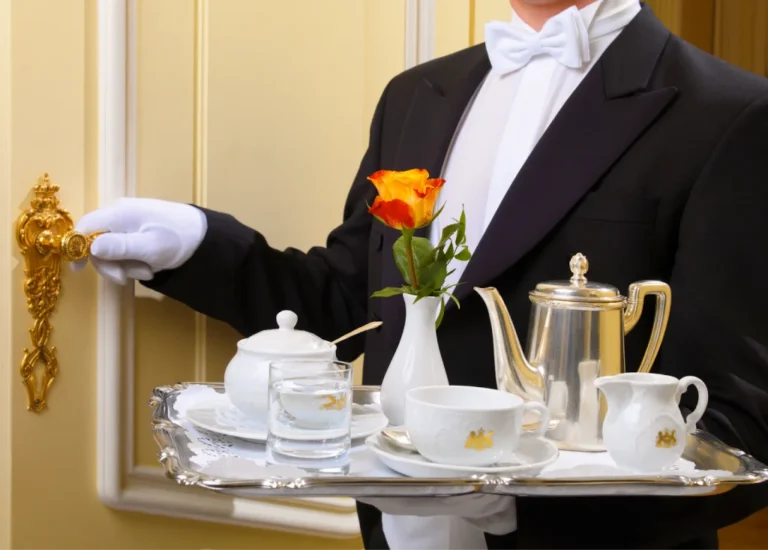
The Intrusion-Service Spectrum: Every interaction with hotel staff is an intrusion into the shared time of the couple. The objective is to maximize service while minimizing the number of interactions. An elite property executes its duties—turn-down, dining, cleaning—without the guest ever seeing the staff.
-
The “General Manager” Primary Indicator: The operational culture of a property is a direct reflection of its current General Manager. If the GM has been in the role for less than 18 months, the property is in a transition state. High-tenure leadership is the most reliable indicator of consistent service delivery.
-
The Environment-As-Third-Party Model: View the hotel architecture as the third member of your relationship for the duration of the trip. If the architecture is confusing, noisy, or insecure, it acts as a disruptive third party.
Key Categories and Variations of Asset Profiles
When searching for the best luxury hotels for couples, consider the following categories based on their operational intent.
Realistic decision logic dictates that categorization is about utility. If the objective is deep rest, the “Sanctuary Estate” is the superior choice. If the objective is exploring a new city without compromising privacy, the “Urban Fortress” is required to neutralize the noise and chaos.
Detailed Real-World Scenarios
Scenario 1: The Urban Anniversary
A couple seeks to celebrate an anniversary in a high-density global city known for its “hype” properties.
-
Constraints: Desire for fine dining and culture, but also for total, un-observed privacy.
-
Decision: They bypass the “trendy” high-rise hotels that focus on rooftop bars and instead select a property with “Hardened Access”—where the lobby is not the transit point for all guests.
-
Failure Mode: Selecting a trendy, influencer-heavy hotel would have resulted in an environment characterized by crowds, noise, and constant external observation.
Scenario 2: The Sabbatical Escape
A pair seeks a two-week period of intense shared work and recovery.
-
Constraints: Need for zero physical and digital friction, absolute silence.
-
Decision: Selecting a property with a “detached villa” structure, where the unit is structurally separated from other guests and the main operational areas.
-
Failure Mode: Attempting this in a standard hotel suite, even a luxury one, would fail due to the inherent noise transfer through corridors and neighboring walls.
Planning, Cost, and Resource Dynamics
The economic management of elite couple-travel requires an audit of the “Total Cost of Presence.” When looking for the best luxury hotels for couples, the room rate is the least significant line item.
Budgeting should account for the “Failure Cost.” If an amenity fails (e.g., poor connectivity, noise) and you spend three hours resolving it, you have paid a massive hidden cost in lost time and relationship equity.
Tools, Strategies, and Support Systems
-
The Pre-Arrival Dossier: Do not rely on the hotel’s generic preference form. Create a concise, one-page document detailing specific requirements (noise tolerance, light sensitivity, dietary protocols, security needs) and ensure it reaches the GM’s office 72 hours before arrival.
-
The Direct Sales Relationship: If you intend to stay in a city multiple times, bypass the reservation desk. Establish a direct contact with the Director of Sales. They can manage your long-term account and provide concessions that the front desk cannot.
-
The “Sweep” Protocol: Upon arrival, physically verify the room’s access points, the network connectivity, and the sound profile. If it fails the sweep, request a room change immediately.
-
Loyalty Arbitrage: Consolidate your stays within a single high-end network. The status gained is a tangible asset used to demand service recovery when the system fails.
Risk Landscape and Failure Modes
The primary risk in the luxury sector is “Institutional Drift.”
-
The Maintenance Trap: Urban hotels operate under constant, 24/7 wear and tear. A property that is not operating on a strict, preventative maintenance cycle will suffer from “invisible decay”—erratic climate control, degrading hardware, and flickering lighting.
-
The “Key Person” Dependency: Boutique properties often rely on a single, talented individual. If that person (the GM or Head Concierge) leaves, the operational culture can collapse within a quarter.
-
The Security-Visibility Paradox: Properties that invest heavily in public-facing marketing often neglect the “invisible” security measures. A lobby that is designed to be “seen” is rarely a lobby designed to be secure.
Governance, Maintenance, and Long-Term Adaptation
Treat your relationship with a preferred property as a portfolio asset.
-
Audit Cycle: Re-evaluate your preferred properties every 12 months. Urban environments shift; a hotel that was excellent last year may have changed ownership or management focus.
-
Adjustment Triggers: If a property fails to meet two specific requests in a row, initiate a “Re-Vet.” Do not allow past loyalty to override current performance data.
-
The Layered Checklist:
-
[ ] Verification of network security (partitioned Wi-Fi).
-
[ ] Tenure review of senior staff (GM, Concierge, Housekeeping Head).
-
[ ] Audit of the “Public-to-Private” flow (how many public areas must be traversed to reach the room?).
-
Measurement, Tracking, and Evaluation
-
Leading Indicators: The responsiveness to non-urgent, specific pre-arrival requests. If they are proactive and precise here, they will be proactive in a crisis.
-
Lagging Indicators: The “Service Resolution Speed.” If an operational error occurs, how quickly is it solved without escalation?
-
Qualitative Signal: “Silent Recognition.” The best properties know your preferences without you having to state them, but they do not make a performance of it. They simply execute.
Common Misconceptions and Oversimplifications
-
Myth: “The most famous hotel in the city is the best for couples.” Correction: Famous hotels are often the most crowded, noisy, and impersonal.
-
Myth: “Price is a proxy for service.” Correction: High pricing often pays for the brand’s marketing and overhead, not necessarily the depth of the concierge team.
-
Myth: “The newest hotel is the best.” Correction: New hotels often suffer from “teething issues”—untested staff, incomplete systems, and construction residue.
-
Myth: “Loyalty status solves all problems.” Correction: Status helps with upgrades, not with operational complexity.
Ethical and Practical Considerations
In the current landscape, the most resilient properties are those that integrate ethically into their neighborhoods. A hotel that acts as an “island” of extraction, failing to support local labor or environmental standards, is structurally brittle. It lacks the deep, community-level relationships that are required to manage local operational disruptions (e.g., transit strikes, utility failures). Choosing properties that demonstrate a commitment to their specific environment—rather than generic, top-down branding—is an indicator of a well-managed, long-term asset.
Conclusion
Navigating the landscape of the best luxury hotels for couples is an exercise in operational discipline. By prioritizing transparency, counterparty reliability, and mission-fit over the simplicity of marketing promises, the discerning pair can transform their stay from a source of friction into a strategic asset. The imperative to understand and rectify the common pitfalls in this sector is not about finding the most opulent decor; it is about finding the environment where the complexity of the world is stripped away, leaving only the clarity required to focus on the shared experience.