Best luxury hotels for corporate events: A strategic operational guide.
Corporate events function as high-stakes logistical exercises where the tolerance for error is effectively zero. Unlike social or leisure travel, which prioritizes atmosphere and experience, corporate functions are governed by the rigid demands of content delivery, networking utility, and operational continuity. When an organization commits its capital and brand reputation to an off-site engagement, the venue ceases to be a passive backdrop and instead becomes a core piece of business infrastructure. The successful deployment of a C-suite summit, a global product launch, or a high-level stakeholder retreat hinges on the seamless integration of spatial layout, technological bandwidth, and service personnel responsiveness.
The assumption that “luxury” is synonymous with “operational excellence” is a recurring fallacy that frequently undermines major events. A property may boast world-class aesthetic appeal—opulent lobbies, high-thread-count linens, and Michelin-starred dining—while simultaneously failing the fundamental requirements of a large-scale corporate event, such as high-density Wi-Fi throughput, redundant power supply, or the logistical agility required for a rapid room turnover. Selecting the correct venue requires a pivot from evaluating “hospitality” to auditing “infrastructure.”
Professional event strategists do not search for the most famous hotels; they search for properties where the service-level agreement (SLA) is rigorously defined and where the physical plant is built to absorb the stresses of professional usage. Identifying the best luxury hotels for corporate events requires a forensic examination of the property’s back-of-house logistics, their historical performance with high-demand clients, and the elasticity of their operational teams when facing the inevitable complexities of professional program management.
Understanding “best luxury hotels for corporate events”
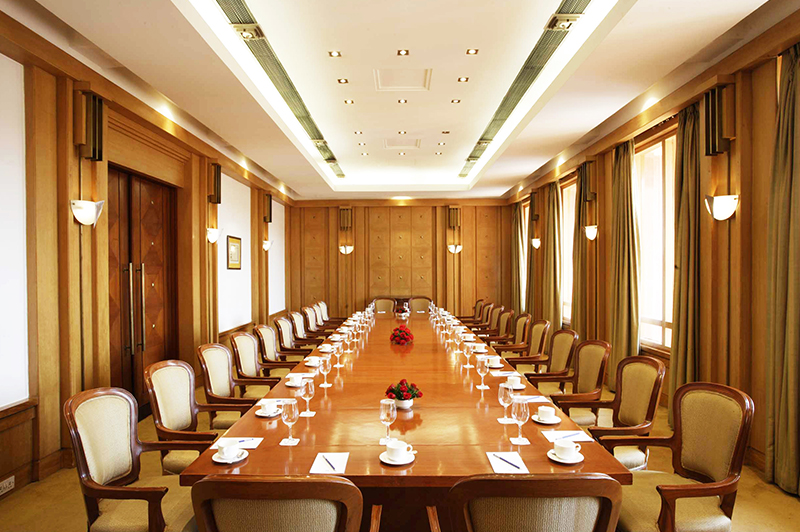
The classification of properties as the best luxury hotels for corporate events is often distorted by marketing-driven metrics. Common misunderstandings begin with the reliance on “star ratings” or “brand prestige.” While these indicators suggest a baseline of service, they do not correlate to the property’s ability to host a demanding corporate function. A property may be excellent at servicing leisure travelers while being disastrously ill-equipped to manage the simultaneous arrival of 200 high-level executives or the power requirements of a complex audiovisual stage setup.
Oversimplification in the selection process is the primary cause of event failure. When organizers prioritize capacity—how many bodies a room can hold—over “utility,” they ignore the variables that actually dictate success. Utility encompasses the floor-to-ceiling height for staging, the width of service corridors for load-in efficiency, and the proximity of breakout rooms to the primary plenary space to manage attendee flow. Relying on a hotel’s capacity chart without interrogating their “service capability” for specific event types is a strategic error.
True mastery in this sector involves understanding the difference between “aesthetic throughput” and “operational throughput.” Aesthetic throughput is the ability to maintain the hotel’s visual standard during a busy period. Operational throughput is the ability to maintain the functionality of the business event—ensuring that breakout sessions start on time, that the AV doesn’t fail, and that the F&B service doesn’t disrupt the keynote speakers. The properties that consistently emerge as the top contenders are those that have dedicated event infrastructure (separate entrances, integrated rigging, soundproof partitioning) rather than those attempting to adapt leisure spaces for business utility.
Deep Contextual Background: The Evolution of Professional Hospitality
The architectural evolution of luxury hotels has followed the shift from the “Grand Ballrooms” of the 20th century to the “Integrated Hubs” of the current era. Decades ago, corporate gatherings were secondary functions for hotels; the space was designed primarily for social banqueting. This historical legacy meant that many older luxury properties were characterized by fixed structures, poor acoustics for speech (rather than music), and inadequate digital infrastructure.
In the last fifteen years, we have entered the “Smart Asset” era. The most competitive properties now recognize that corporate revenue is more stable and higher-margin than leisure revenue. Consequently, their capital expenditure is focused on things invisible to the leisure guest: dual-fiber optic internet backbones, industrial-grade HVAC systems in meeting spaces, and, crucially, specialized staff management. The evolution of the best luxury hotels for corporate events has been defined by this shift from “accommodations provider” to “logistical partner,” where the hotel essentially operates as a secondary department of the corporation hosting the event.
Conceptual Frameworks and Mental Models
To evaluate venues with analytical rigor, utilize the following frameworks:
-
The Throughput-to-Utility Ratio: This measures the hotel’s ability to maximize attendee density without degrading the service or AV experience. If the room is large but the rigging capacity is low, the utility for a corporate event is poor.
-
The “Service-Barrier” Model: Evaluate the degree to which the hotel segregates corporate attendees from leisure guests. A high degree of segregation (private lobbies, dedicated elevators) correlates to higher security and better attendee focus.
-
The Operational Elasticity Metric: A measure of how quickly a venue can adapt to change (e.g., last-minute room swaps, sudden dietary shifts, AV modifications). This is the “hidden” value of the most successful properties.
Key Categories and Variations of Asset Profiles
When categorizing properties, focus on the “Operational DNA” of the asset.
Realistic decision logic dictates that when you assess the best luxury hotels for corporate events, the category must align with the event’s goals. An urban flagship is essential for a high-turnover sales kickoff, while an integrated resort is superior for an incentive trip where “flow” and “atmosphere” are as important as the content.
Detailed Real-World Scenarios
Scenario 1: The Global Product Launch (High Tech)
A multinational tech firm requires a venue for 500 attendees, necessitating massive bandwidth and complex A/V setups.
-
Constraint: The property must have a dedicated IT support team on-site, not a third-party vendor.
-
Decision: Choosing an Urban Flagship property that has integrated IT infrastructure.
-
Failure Mode: Selecting an “aesthetic-first” property that relies on external A/V contractors. If the network goes down, the dependency on external vendors slows recovery time, leading to significant disruption.
Scenario 2: The C-Suite Strategic Retreat (High Security)
-
Constraint: Confidentiality and absolute privacy are paramount.
-
Decision: Utilizing an Independent Boutique property with a “buyout” clause.
-
Failure Mode: Using a large flagship property where the executives are forced to share public spaces (lobby, elevators) with general leisure guests. The lack of compartmentalization poses a significant security and perception risk.
Planning, Cost, and Resource Dynamics
The “Total Cost of Presence” (TCEP) is often significantly higher than the quoted “Daily Delegate Rate.”
-
Fixed Costs: Room block, rental fees, taxes.
-
Variable Costs: Bandwidth surcharges, specialized A/V rigging, labor (often taxed at 20-30%), and the “monopoly tax”—the fee added when a hotel forbids outside vendors.
Tools, Strategies, and Support Systems
-
The “Site Visit” Stress Test: Never visit a venue during a quiet time. Visit when they are hosting a similar-sized event. Observe how the staff manages the chaos of coffee breaks and room turnover.
-
The RFP Standardizer: Do not use the hotel’s template RFP. Create your own that explicitly asks for network capacity, electrical load per wall, and service staff ratios.
-
The “Shadow” Concierge: For massive events, hire a third-party event lead who acts as the liaison between your corporation and the hotel’s event manager.
-
Hardware Audit: Verify the “blackout” capabilities of meeting rooms. Natural light is excellent for leisure, but catastrophic for projection-heavy corporate presentations.
Risk Landscape and Failure Modes
There are systemic risks inherent in large-scale corporate event procurement.
-
The “Bait and Switch” Staffing: The event manager who sold you the venue is often not the person who will execute the event. Always confirm the identity of the on-site operational lead.
-
The “Bandwidth Bottleneck”: Most luxury hotels are not built to handle the concurrent device load of 500+ professionals. Bandwidth must be contractually guaranteed, not just promised.
-
Rigging Limitations: A room may hold the weight of the people, but fail the weight of the lighting trusses. Failure to audit this ceiling capacity leads to last-minute, expensive structural modifications.
Governance, Maintenance, and Long-Term Adaptation
Treat your corporate event venue selection as a procurement process with specific governance.
-
Annual Audit: Review the performance of your preferred venues. If a property consistently fails on A/V reliability, remove it from the corporate “approved” list, regardless of its prestige.
-
Adjustment Triggers: If your event requirements evolve (e.g., more hybrid-ready, higher security needs), trigger a re-evaluation of your venue partners.
-
The Layered Checklist:
-
[ ] Verification of service staff-to-guest ratios during peak hours.
-
[ ] Audit of the network infrastructure’s redundancy.
-
[ ] Confirmation of the property’s “crisis management” plan for events.
-
Measurement, Tracking, and Evaluation
-
Leading Indicators: The responsiveness and transparency of the hotel’s pre-event team. If they cannot answer questions about rigging or bandwidth in the first round of RFP, the operational execution will be poor.
-
Lagging Indicators: “Attendee Friction Index.” Measure how long it took to get coffee, how long the check-in took, and how often the A/V failed.
-
Qualitative Signal: “Operational Calm.” Does the hotel staff appear frazzled or organized during the event’s peak? Organized staff indicates an integrated, well-trained team.
Common Misconceptions and Oversimplifications
-
Myth: “If the hotel is luxury, the service will be excellent.” Correction: The service will be excellent for leisure. Business service requires a different set of skills—it is faster, more precise, and less “ceremonial.”
-
Myth: “A buyout is always the safest option.” Correction: Buyouts are expensive and often create a “dead” atmosphere. Sometimes, a well-managed section of a large hotel provides a better “energy” than an empty buyout.
-
Myth: “All A/V is the same.” Correction: A/V is the single most common failure point. The best luxury hotels for corporate events own their gear or have an exclusive, on-site partner that is essentially a department of the hotel.
-
Myth: “We can save money by using our own vendors.” Correction: Most hotels charge massive “outside vendor fees” that negate any savings, and using outside vendors creates a “blame loop” if something fails.
Ethical and Practical Considerations
In the context of large-scale events, sustainability is the new benchmark for corporate responsibility. The “best” hotels are those that provide transparent reporting on the event’s carbon footprint—energy usage, waste management, and food sourcing. Corporate entities should prioritize venues that have moved beyond “greenwashing” and into verifiable sustainability metrics, as this will soon be a mandatory requirement for corporate financial disclosure.
Conclusion
The selection of the venue for a corporate function is an exercise in operational architecture. The best luxury hotels for corporate events are those that offer a synthesis of physical capability and service discipline. They are venues that understand the distinction between a guest who is there to relax and a guest who is there to work. By prioritizing infrastructure (bandwidth, power, rigging) and operational throughput (staffing, flow, modularity) over superficial prestige, organizations can ensure that their venue choice supports, rather than hinders, their strategic objectives. True success in this domain is measured by the invisibility of the infrastructure; the event should proceed with such fluid operational precision that the participants remain entirely focused on the content, oblivious to the immense, complex logistical machine operating in the background.