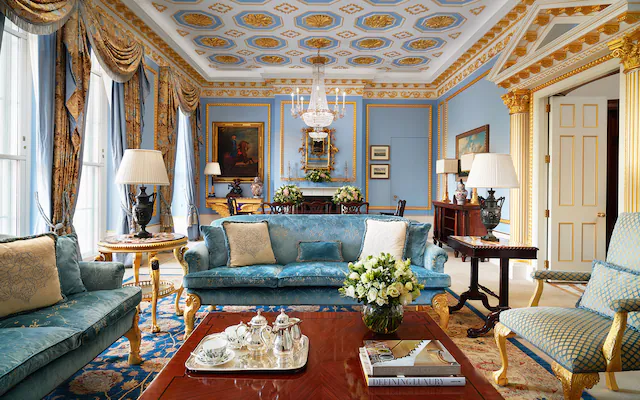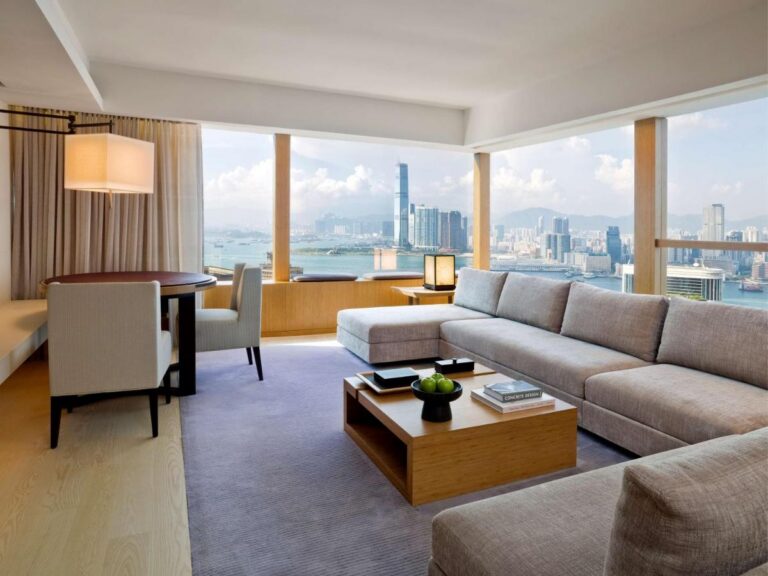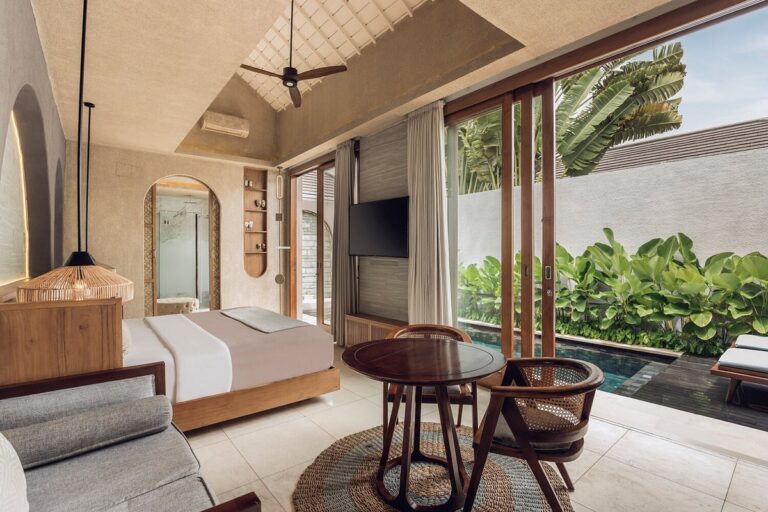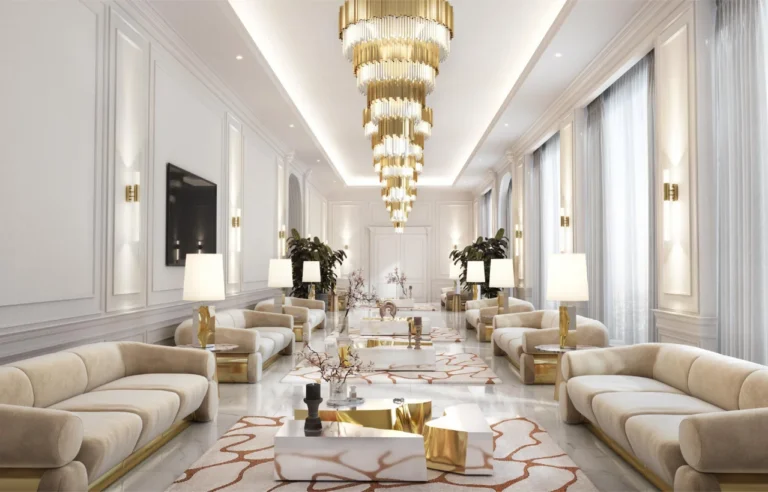
Best luxury hotels for extended stays: A strategic operational guide.
The traditional definition of a hotel guest is someone who occupies a space transiently. The operational model for the standard luxury hotel is built around this temporary status; it focuses on high-impact, short-duration interactions—the welcome drink, the nightly turndown, the rapid room-turn. However, a fundamental shift is occurring in the upper echelons of global travel. High-net-worth individuals, displaced executives, and digital nomads are increasingly treating hospitality assets as primary or secondary residences. This shift requires a departure from the “transient guest” mindset.
A hotel that functions perfectly for a three-day business conference often fails entirely when subjected to the rigor of a three-month occupancy. The friction points—service scripts, the frequency of housekeeping, the quality of in-room connectivity, and the integration of dining facilities—change when the guest ceases to be a visitor and becomes a resident. Identifying the best luxury hotels for extended stays requires a discerning audit of infrastructure, service endurance, and, most importantly, the hotel’s internal culture regarding long-term occupants.
This article serves as a professional assessment framework for identifying and navigating properties designed for prolonged habitation. It is intended for individuals who demand continuity and operational excellence over a scale of months rather than nights.
Understanding “best luxury hotels for extended stays”
The pursuit of the best luxury hotels for extended stays is a exercise in separating “marketing gloss” from “operational reality.” A common misunderstanding suggests that the presence of a kitchenette or a larger suite category defines suitability for long-term living. This is a superficial assessment. True suitability is determined by the “service cycle” of the hotel. Most luxury hotels employ staff trained for the 48-hour guest cycle. When applied to a long-term resident, this service model becomes intrusive, repetitive, and eventually exhausting.
Oversimplification poses a significant risk to the resident’s quality of life. The most effective properties for long-term living do not just provide a larger room; they provide a “resident-facing” staff layer—concierges and housekeepers who understand that the resident requires a different cadence of engagement than the tourist. When you analyze a property, you must look for the integration of private and public space. Does the property have a dedicated resident lounge? Is the food and beverage program designed for monotony-avoidance (i.e., does the menu rotate sufficiently, or can it be bypassed for private catering)?
The best luxury hotels for extended stays are those that offer a “buffer” between the resident and the hotel’s transient operation. This might manifest as a separate entrance, a private elevator bank, or a specific department—often labeled “Residence Management”—distinct from the front desk. Failing to distinguish between these operational models leads to the “institutional fatigue” that plagues many guests who mistake a standard suite for a long-term residence.
Deep Contextual Background: The Evolution of Residential Hospitality
Historically, the great hotels of the 19th and early 20th centuries were effectively apartment complexes for the landed gentry. The Savoy in London, The Ritz in Paris, and the Waldorf Astoria in New York were designed with the expectation of multi-month residency. These properties featured grand, private suites that functioned as domestic spaces, complete with service quarters for the resident’s staff.
The mid-20th century saw the commoditization of the hotel industry, which prioritized maximizing “key count” and turnover. The “Grand Dame” model of long-term residency largely disappeared, replaced by the standardized “Executive Suite.” Today, we are seeing a resurgence of the residential model through “Branded Residences.” These are assets that combine the legal structure of private real estate with the service infrastructure of a luxury hotel. However, the market is currently split between these purpose-built residences and standard hotels attempting to “retrofit” their existing infrastructure to capture the long-stay market.
Conceptual Frameworks and Mental Models
To evaluate potential properties, utilize the following frameworks:
-
The Service Endurance Ratio: This measures the property’s ability to provide “invisible” service. Can the staff assist you without requiring a daily interaction? A hotel that insists on daily room inspections is unsuitable for long-term residence.
-
The Infrastructure Density Model: Evaluate the ratio of residential facilities (kitchens, laundry, private storage) to hotel facilities (room service, on-site dining). For stays exceeding 30 days, the resident must have the capacity for autonomy.
-
The Resident-Transient Partition: The degree of separation between the hotel’s public lobby/amenities and the resident’s private living quarters. The ideal scenario is “exclusive access” to public amenities without the necessity of traversing public lobby areas.
Key Categories and Variations of Asset Profiles
When surveying the landscape, categorize the properties based on their operational intent.
Realistic decision logic indicates that the best luxury hotels for extended stays are those categorized as “Branded Residences” if the stay duration exceeds three months, as these provide the required legal and service frameworks for true residency.
Detailed Real-World Scenarios
Scenario 1: The Executive Relocation
An executive requires six months in a foreign city while their permanent residence is finalized.
-
Constraint: The executive needs to host business meetings but also maintain a private home life.
-
Decision: Choosing a branded residence with a private meeting room facility. This allows for total separation of “home” and “work,” which a standard hotel room fails to provide.
-
Failure Mode: Selecting a transient hotel room. The constant housekeeping disruptions and public lobby meetings make the stay unworkable within weeks.
Scenario 2: The Sabbatical/Renovation Displacement
A family needs to vacate their home for four months.
-
Constraint: Need for kitchen facilities and laundry capability.
-
Decision: Opting for a luxury apartment-hotel in a residential district rather than the city center.
-
Second-Order Effect: The family integrates into the local neighborhood, using the hotel as a base rather than a cocoon. This “local residency” model is often more sustainable than total hotel confinement.
Planning, Cost, and Resource Dynamics
The “Total Cost of Residency” (TCR) is distinct from the nightly rate.
-
Lease Premiums: Long-term stays should always be negotiated as a lease or a “monthly contract” rather than a sum of nightly rates.
-
Service Unbundling: Determine which services you actually require. Do you need daily housekeeping, or can you negotiate for twice-weekly service to reduce cost and intrusion?
-
Ancillary Expenses: Food and beverage costs during a long stay can exceed the room rate. Look for properties with private kitchen capability to mitigate this.
Tools, Strategies, and Support Systems
-
The “Resident Liaison” Request: When contacting the property, request to speak with the “Director of Residences” or “Long-Stay Manager.” Do not rely on the general reservations line.
-
Service Frequency Negotiation: Request a “service menu.” Define exactly what you need (linens, trash removal, deep cleaning) and build a custom schedule. This is a hallmark of the best luxury hotels for extended stays.
-
Third-Party Concierge: If the hotel concierge is too focused on transient guests (booking theater tickets, dinner reservations), retain a personal assistant to handle long-term logistics (doctor appointments, local school enrollment).
-
Hardware Audit: Always conduct a physical site inspection of the room to test connectivity, HVAC noise levels (the silent killer of long stays), and the reliability of the kitchenette.
Risk Landscape and Failure Modes
There are systemic risks when committing to a long-term hotel stay.
-
Maintenance Cycles: A property might be perfect in month one, but then the hotel begins a renovation in month three. Always demand a clause regarding “capital improvements” that would impact your room.
-
Service Drift: Staff turnover in luxury hotels is high. Your relationship with the front desk might vanish in a single management shift.
-
The “Transient Creep”: If the hotel is also serving transient guests, you will be subject to the loud, party-centric culture of the weekend crowd. You must ensure your unit is in a “quiet zone.”
Governance, Maintenance, and Long-Term Adaptation
Treat your hotel living arrangement as a documented governance structure.
-
Contractual Reviews: Every 30 days, conduct a service review. Are the housekeeping standards meeting your expectations? Is the hardware functioning?
-
Adjustment Triggers: If your lifestyle needs change (e.g., need more office space), trigger a room audit immediately.
-
The Layered Checklist:
-
[ ] Verification of sound insulation between units.
-
[ ] Confirmation of private kitchen appliance quality.
-
[ ] Audit of the “resident-only” amenity access (pool, gym, lounge).
-
Measurement, Tracking, and Evaluation
-
Leading Indicators: The “Staff Memory.” Does the concierge remember your preferences for laundry, mail, and visitors without you having to remind them?
-
Lagging Indicators: “Hardware Reliability.” How many times did the HVAC, Wi-Fi, or plumbing fail during the residency?
-
Qualitative Signal: “The Resident Ecosystem.” Do you see other long-term residents? A hotel with a high percentage of residents usually has a more “home-like” atmosphere.
Common Misconceptions and Oversimplifications
-
Myth: “All suites are created equal.” Correction: A suite in a business hotel is designed for sleeping; a suite in a residential property is designed for living.
-
Myth: “The most expensive hotel is the best.” Correction: The most expensive hotel is often the most transient-focused. High price does not equate to “home-like” comfort.
-
Myth: “I can just extend my stay indefinitely.” Correction: Many properties have policies preventing tax residency or “tenant rights” from accruing. Understand the legal limits of your stay.
-
Myth: “The amenities will keep me occupied.” Correction: For a long-term stay, the absence of “amenity-overload” (constant events, lobby crowds) is often more valuable. The best luxury hotels for extended stays offer privacy, not just programmed entertainment.
Ethical and Practical Considerations
In the context of extended stays, there is an ethical imperative to respect the staff who support your residency. The relationship is long-term, not transactional. Respecting the staff’s time, understanding their operational constraints, and recognizing that you are living in a commercial environment are essential for a successful experience. Furthermore, consider the “community impact.” If you are residing in a historic neighborhood, engage with the locality rather than remaining isolated within the hotel’s “bubble.”
Conclusion
The selection of a long-term residence within a luxury hotel framework is not merely a choice of room category; it is a choice of lifestyle management. It requires the ability to look past the superficial veneer of marble and gold leaf to evaluate the underlying operational endurance, the quality of resident-facing service, and the structural capability of the property to support life over a period of months. By applying a rigorous, audit-based approach to this decision—prioritizing resident autonomy, service endurance, and infrastructure reliability—one can secure a living environment that offers the precision of a luxury hotel with the functional necessity of a home. The best luxury hotels for extended stays are those that disappear into the background, providing the infrastructure for a life well-lived rather than a trip well-taken.