Top luxury hotel catering options: An operational audit of high-end events.
The perception of event catering in the luxury hotel sector is frequently distorted by the theatricality of the presentation. While the visual arrangement of a plating or the elegance of a server’s delivery are critical, these are merely the final, downstream outputs of an immensely complex logistical system. A professional assessment of any high-end property requires looking past the menu and into the architecture of the catering department itself. The true challenge is not the recipe; it is the capacity to scale that recipe while maintaining absolute thermal integrity, structural consistency, and service precision.
When analyzing the landscape, it becomes evident that the properties providing the most reliable results are not necessarily those with the most “creative” chefs, but those with the most disciplined supply chains and the most robust brigade systems. Catering in a luxury environment is a feat of engineering. It involves managing a fluctuating workforce, mitigating environmental factors within ballroom settings, and ensuring that the logistical chain—from cold storage to the guest’s palate—remains unbroken.
This analysis provides a rigorous audit of the sector. By moving beyond the surface-level marketing materials, we can establish a framework for identifying which properties possess the infrastructure to deliver a flawless, high-volume culinary experience. Identifying the top luxury hotel catering options is an exercise in scrutinizing the machine behind the meal.
Understanding “top luxury hotel catering options”
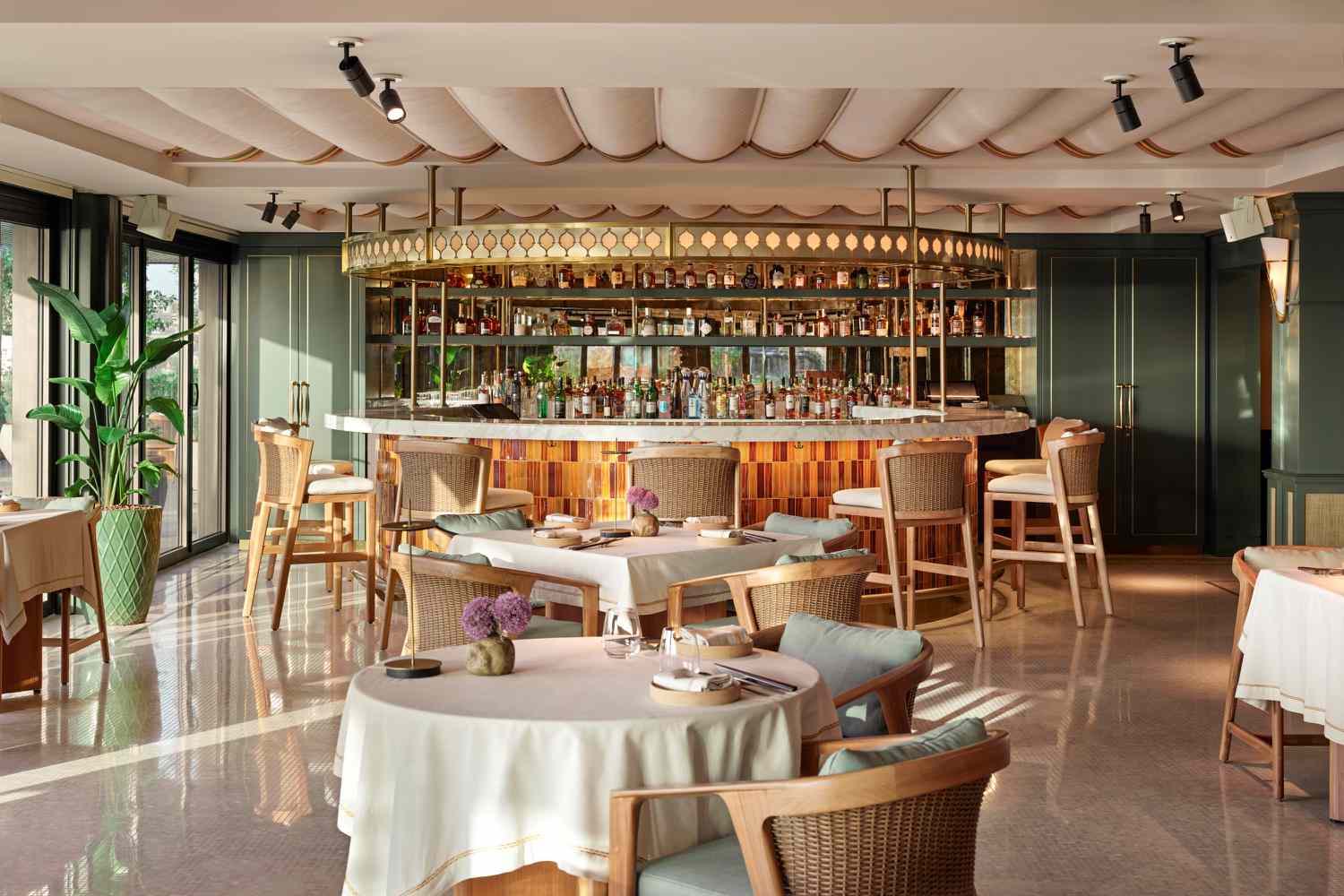
To grasp the reality of top luxury hotel catering options, one must first discard the notion that catering is a static product. It is a highly variable, service-dependent process. The common misunderstanding is that a hotel’s standard restaurant quality translates automatically to its catering division. This is a fallacy. Catering is “mass-scale precision”—it requires the ability to replicate a restaurant-grade dish for 500 guests simultaneously, often in a temporary space miles away from the main kitchen.
Oversimplification in this sector is dangerous. Planners often focus on the menu items themselves—”Can they do a beef wellington?”—rather than the service radius. A hotel’s capability is determined by the distance between the kitchen and the guest. If the banquet kitchen is outdated, the equipment is failing, or the staffing levels are insufficient to support the service ratio, the quality of the food will deteriorate regardless of the chef’s pedigree.
The best providers do not present menus; they present logistical plans. They discuss equipment capacity, heat-lamp recovery times, and brigade synchronization. When selecting among the top luxury hotel catering options, the discerning client prioritizes these invisible operational metrics over the aesthetic appeal of the appetizers.
Deep Contextual Background: The Evolution of Event Gastronomy
The historical trajectory of hotel catering has moved from the “Banquet Hall” era (1950s–1980s), characterized by mass-produced, standardized, low-flavor-profile items, to the current “Bespoke Experiential” era. The primary driver of this shift was the professionalization of the event planning industry.
This evolution has been defined by the “Kitchen-to-Ballroom Integration.” Modern luxury properties have invested millions into satellite kitchens, high-speed plating systems, and advanced climate-controlled transport. We are currently witnessing the end of the “Generalist Catering” model, where the same kitchen served everyone. Today’s top-tier facilities utilize specialized brigades, where one team manages the hot line, another manages the pastry/dessert logistics, and a third manages the “finishing” or plating stations located inside or adjacent to the event space. This specialization is the hallmark of the industry’s leaders.
Conceptual Frameworks and Mental Models
To evaluate these providers with professional rigor, the following models should be applied:
-
The Thermal Chain: Culinary quality is a direct function of thermal management. Every minute a dish spends in transit, on a holding cart, or sitting under a heat lamp is a degradation of the original culinary intent. The most reliable operators have the shortest “thermal distance” between the finish line and the guest.
-
The Brigade Elasticity Index: How effectively can the team scale from a 20-person intimate dinner to a 500-person gala? Top-tier operators utilize a modular staff structure, allowing them to add “service units” without disrupting the overall command-and-control structure.
-
The Specification Consistency Framework: A common failure mode is “ingredient drift,” where the quality of ingredients diminishes as the guest count increases. High-functioning operators have rigorous, contractually binding procurement protocols for both small and large-scale orders.
Key Categories and Variations of Asset Profiles
When surveying the market, categorize event culinary providers by their operational foundation.
| Category | Typical Landscape | Operational Focus | Primary Trade-off |
| The In-House Brigade | Dedicated Hotel Kitchen | Consistency/Control | Limited menu flexibility |
| The Hybrid/Partnered | Hotel + External Chef | Creativity/Prestige | Coordination complexity |
| The Satellite-Enabled | Complex Event Centers | Throughput/Volume | Potential for “blandness” |
| The Boutique/Private | Exclusive Estates | Bespoke/Precision | Extremely high cost |
Realistic decision logic dictates that for large-scale corporate summits, the In-House Brigade is the most resilient choice due to their deep familiarity with the facility’s power, refrigeration, and service-path constraints.
Detailed Real-World Scenarios
Scenario 1: The High-Volume Gala
A corporation requires a three-course dinner for 800 guests.
-
Constraint: The menu must be identical in quality for every table, and service must be completed within 20 minutes.
-
Decision: The planner avoids the “boutique” catering teams and contracts a major hotel property with a dedicated “banquet brigade” structure.
-
Failure Mode: If the planner had insisted on an outside high-end restaurant team, the lack of familiarity with the venue’s loading docks, staging areas, and power capacities would likely have caused a service collapse.
Scenario 2: The Executive Strategy Session
A small group of 15 senior executives needs a high-intensity, multi-day meal plan.
-
Constraint: Dietary restrictions are varied, and the schedule is unpredictable.
-
Decision: The planner secures a “Chef’s Table” style service where the catering team is embedded within the boardroom floor, rather than serving from a distant kitchen.
-
Second-Order Effect: The catering team functions as a dedicated concierge, allowing the executives to shift schedules without the culinary team needing to “reset” the entire logistical chain.
Planning, Cost, and Resource Dynamics
The “Cost of Presence” in high-end catering is deceptive. It is not simply the price per head. It is the “Resource Multiplier.”
-
Fixed Costs: The venue rental and the baseline “service fee.”
-
Variable Costs: The menu items, which scale linearly with guest count.
-
Logistical Taxes: The cost of specialized equipment, additional labor for setup/strike, and the “unknowns” like power upgrades or tenting.
| Cost Variable | Financial Impact | Variable Type |
| Base Menu Rate | Predictable | Fixed |
| Service/Labor Fees | High | Variable |
| Equipment Rentals | Moderate | Latent |
| Customization Surcharge | Moderate | Variable |
When planning for top luxury hotel catering options, one should budget an additional 20–30% for “contingency logistics”—the costs required to solve unforeseen problems on the day of the event.
Tools, Strategies, and Support Systems
-
The Pre-Event Technical Walkthrough: Require the Director of Catering to walk the service path with you. Ask: “Where are the heat lamps kept? What is the maximum distance from the kitchen to the farthest table?”
-
The Staffing Ratio Audit: Demand the specific ratio of servers to guests. In luxury tiers, 1:10 is standard; 1:20 is acceptable for buffets; anything higher indicates a risk of service delay.
-
The “Pre-Plate” Test: During the menu tasting, ask for the dishes to be served exactly as they would be for 200 people, not as individual plates made by the executive chef in a test kitchen. This reveals the actual capability of the banquet brigade.
-
Local Supply Chain Vetting: Ask where their produce and proteins come from for large-scale events. A top provider has long-standing, pre-booked contracts, not spot-market reliance.
Risk Landscape and Failure Modes
The failure of catering in luxury environments is rarely due to a bad recipe. It is due to systemic collapse.
-
The Brigade Fragility: If the banquet captain or lead sous-chef calls out, the operation often lacks a redundant command structure.
-
Environmental Variance: Large events in historic or non-standard spaces (e.g., gardens, temporary structures) often lack the power load required for modern warming/holding equipment.
-
Supply Chain Whiplash: A failure to secure high-quality ingredients at scale often results in the chef substituting a “second-tier” ingredient, which destroys the culinary integrity of the dish.
Governance, Maintenance, and Long-Term Adaptation
Treat your event catering as a project that requires a lifecycle approach.
-
Audit Cycles: If you utilize the same venue annually, perform a “re-vet” every year. Catering teams turn over rapidly; the team that was excellent in 2025 may be entirely different in 2026.
-
Adjustment Triggers: If a service error occurs (e.g., incorrect dietary handling), do not just request a refund. Initiate a formal “Root Cause” review with the Director of Catering.
-
The Layered Checklist:
-
[ ] Verification of service brigade tenure.
-
[ ] Confirmation of backup equipment onsite.
-
[ ] Audit of the “Dietary Handling Protocol”—how are allergies tracked and served?
-
Measurement, Tracking, and Evaluation
-
Leading Indicators: The precision of the “Banquet Event Order” (BEO). If the document is vague, the execution will be chaotic.
-
Lagging Indicators: The “Service Resolution Speed.” The speed of the “recovery service” is the truest indicator of a top-tier team.
-
Qualitative Signal: “Brigade Cohesion.” Does the staff communicate with hand signals and subtle cues, or are they shouting and disorganized? A quiet kitchen is a controlled kitchen.
Common Misconceptions and Oversimplifications
-
Myth: “The most expensive menu is the best.” Correction: The most expensive menu often features the most complex ingredients, which are the most difficult to execute at scale. Simplicity executed perfectly is the hallmark of luxury.
-
Myth: “The Executive Chef is cooking my meal.” Correction: The Executive Chef designs the menu; the Banquet Brigade executes it. Your meal is only as good as the Banquet Brigade.
-
Myth: “Dietary restrictions are handled automatically.” Correction: In high-volume catering, dietary handling is a manual, human-error-prone process.
-
Myth: “The venue doesn’t matter for the food.” Correction: The venue’s infrastructure (loading, kitchen proximity) dictates the menu’s feasibility.
Ethical and Practical Considerations
The catering industry has a significant footprint regarding food waste and resource management. When evaluating top luxury hotel catering options, seek out those that have a documented policy for surplus food donation or composting. This is not just an ethical imperative; it is a sign of an operation that has mastered its supply chain and is not prone to over-ordering.
Conclusion
The selection of top luxury hotel catering options is an exercise in discerning operational reality from marketing aspiration. It requires the planner to move past the allure of the menu and into the cold, calculated audit of the logistics, the brigade, and the infrastructure. By prioritizing the structural and logistical integrity of the operation, one ensures that the culinary experience is not a variable of the event, but a constant of its success.